Of the gun-making Manton brothers, Joseph is the better known and John the lesser, though any inspection of John’s guns leaves the observer in no doubt as to his capability as a maker.
His father was a farmer and miller from Grantham in Lincolnshire and John (born in 1752) was apprenticed to John Dixon of St. Martin’s in Leicester. One of his later business cards claims he was ‘late foreman to Mr. Twigg’ (London gunmaker John Twigg).
He opened his own business in London and his brother Joseph joined him in 1781 at his premises at 6, Dover Street but did not stay and form a lasting partnership.
Rather, Joseph left and set-up on his own account in 1789. He quickly gained favour with royalty, the East India Company and, famously, the diarist and noted sportsman Col. Peter Hawker. In 1814, he invented the tubelock, which paved the way to the 1822 introduction of percussion-cap ignition.
These connections made Joseph wealthy and widely respected, while John continued to build guns of equal quality but without the same high public profile as his brother. Among the men who worked for John Manton in Dover Street were John Blanch and William Greener, who both went on to found their own firms.
John Manton’s company traded from Dover Street until 1839, though John died in 1834, and his son (George Henry Manton) carried on the family name as John Manton & Son, while another son (Edward) was sent to India to run Manton & Co. Calcutta, which became a successful gunmaker, retailer and outfitter to India’s colonial officers and provincial rulers.
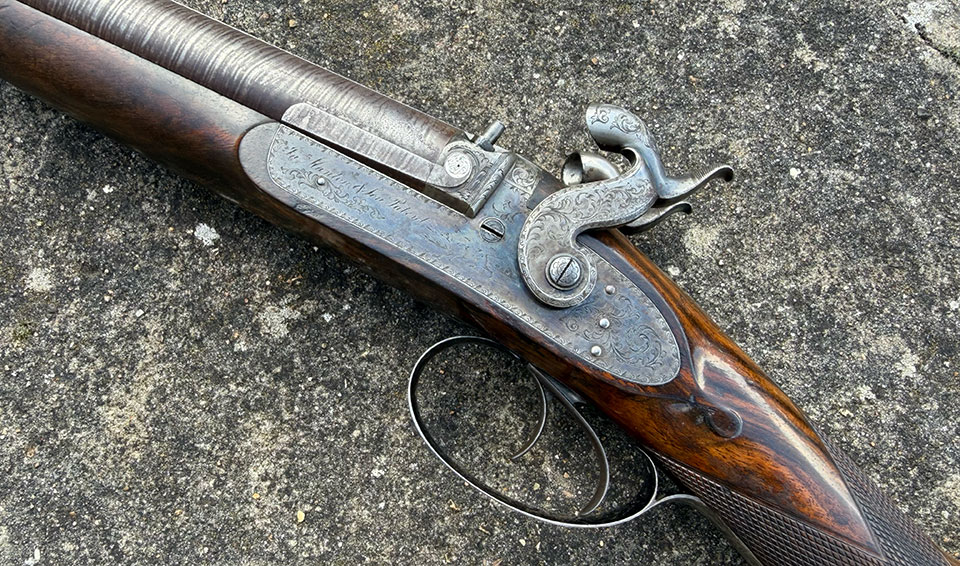
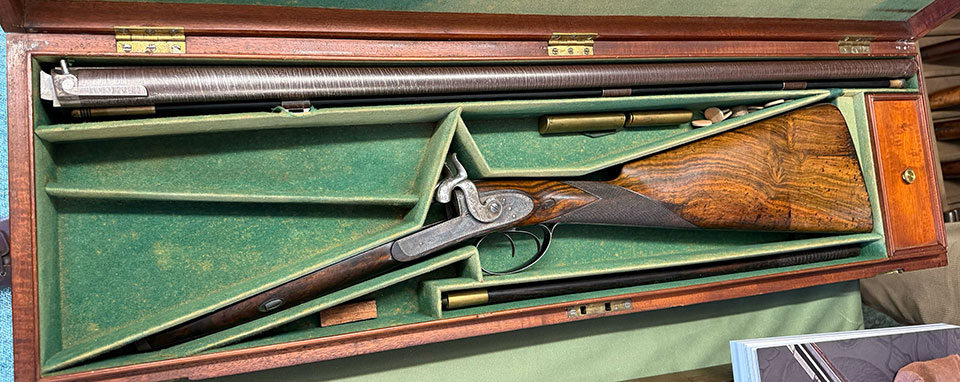
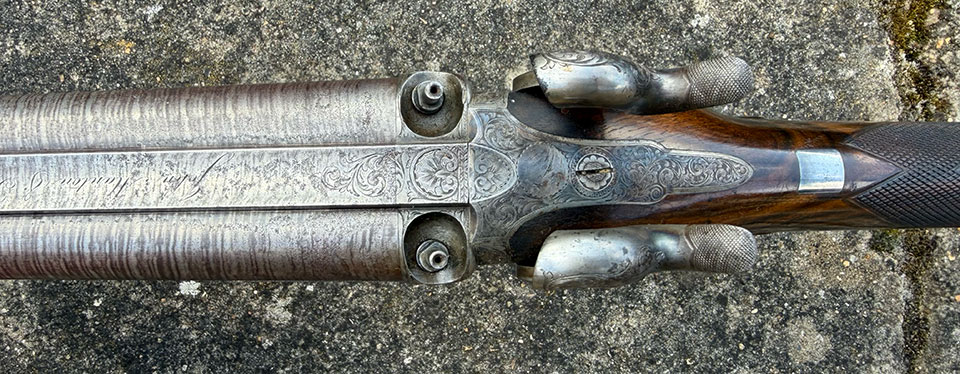
The gun pictured here was built by John Manton & Son and bears the Dover Street name and address. It is a 16-bore percussion gun, Serial No.11533, probably made around 1845. It has 32” browned, laminated twist barrels and remains in remarkably original condition for a sporting gun approaching one-hundred-and-eighty years old.
Considering the rudimentary tools and workshops available to gun makers in the 1840s, the quality of the gun is incredible. It is no wonder that the Manton’s were so revered by sportsmen of the day.
John’s work is, in the opinion of most experts, the equal of his brother in terms of the quality of his best output.
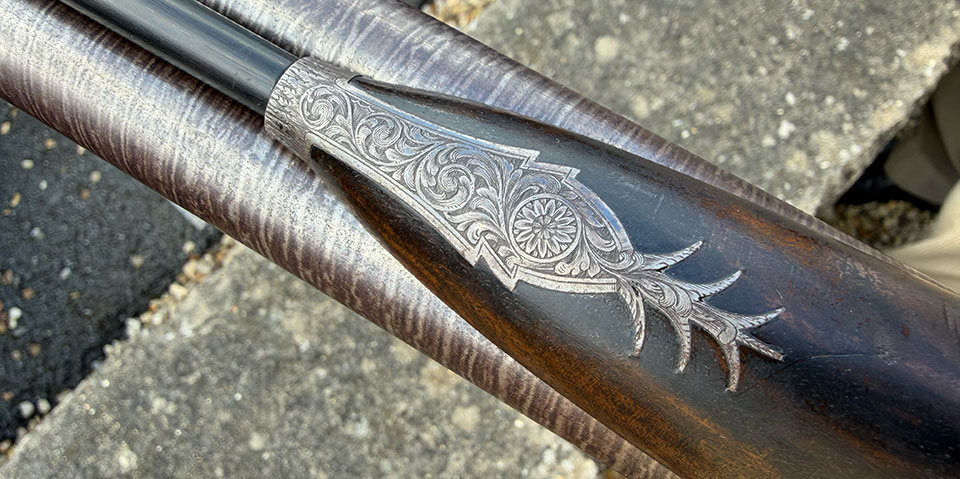
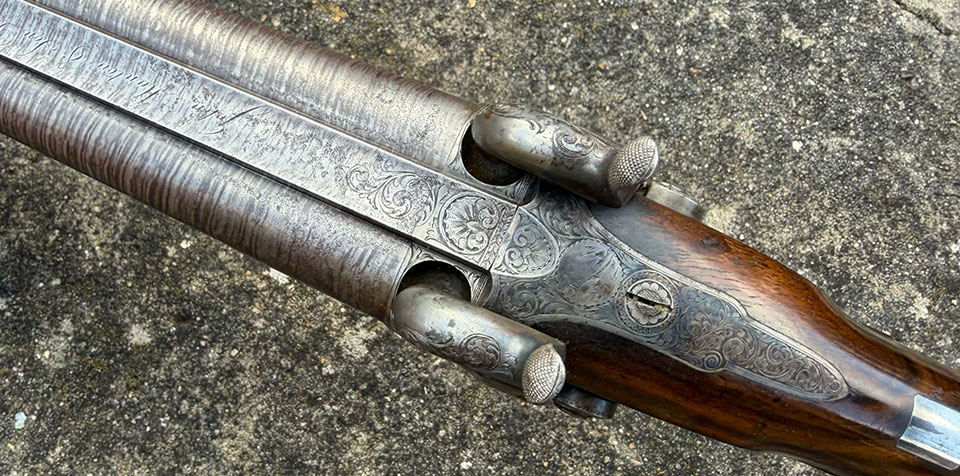
No.1153 has platinum-vented plugs, while the hammers and furniture are engraved with neat, bold scrolls. Simple game scenes decorate the locks, guard and strap.
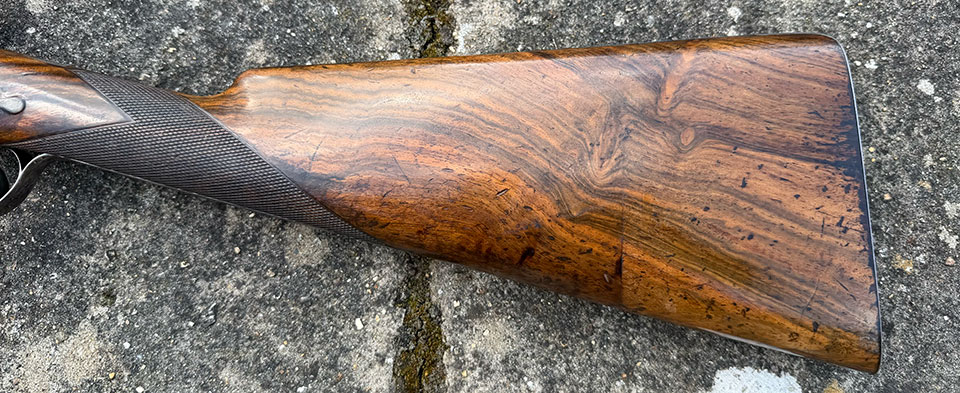
The boldly-figured walnut stock is chequered at the hand and remains perfectly fitted to the metalwork in every respect. The original blue and case colour hardening finishes are largely in-tact and the gun shows very little sign of wear.
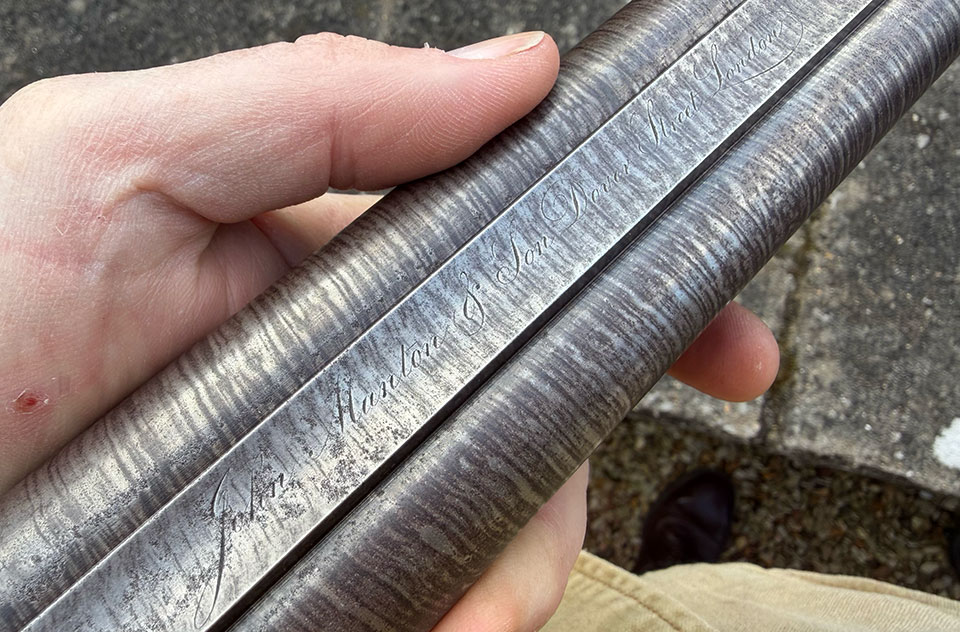
Given the remarkable quality, the evidence of exquisite workmanship and the simple beauty and rarity of the object itself, the £3,000 - £5,000 asking price at auction this month seems incredible value for money.
Here in the UK, percussion guns like this are exempt from licence requirements and may be kept and displayed as objects or works of art without the requirement to lock them away that affects Section 1 and Section 2 shotguns and firearms. This makes them trouble=free to collect and enjoy.
Prices are currently favouring the buyer and I doubt there is better value in any market than what is currently available in percussion sporting guns like this.
Published by Vintage Guns Ltd on