The Kipplauf concept is rooted in Germany and Austria. It is best described as a light, single shot stalking rifle and it represents a gentlemanly and sporting approach to hunting with a rifle that has long been held by Teutonic aristocrats.
The Kipplauf-armed hunter knows he has only one shot and so he had better make sure his stalking skills get him close enough to his quarry that he is assured a one-shot kill.
This concept of the one-shot pact between hunter and the animal he seeks to grass speaks well of the ethics of the true sportsman. Take the quarry perfectly or do not take it at all.
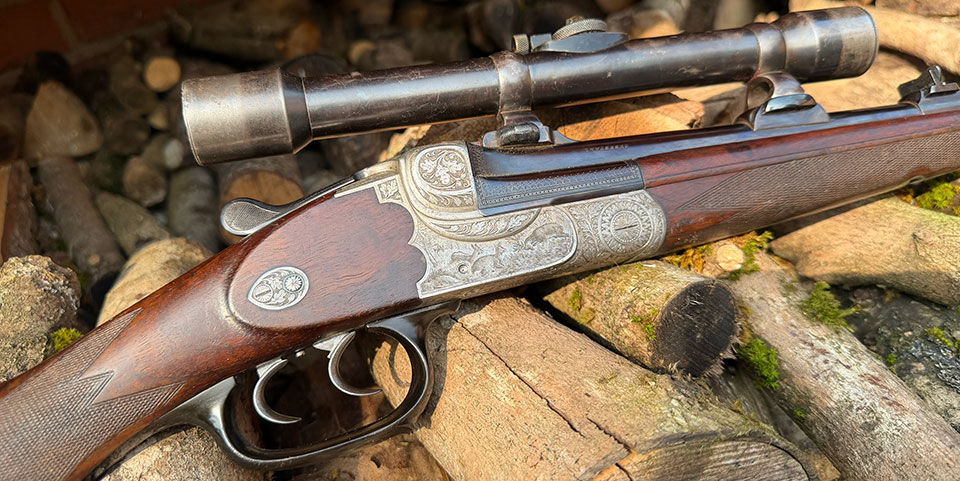
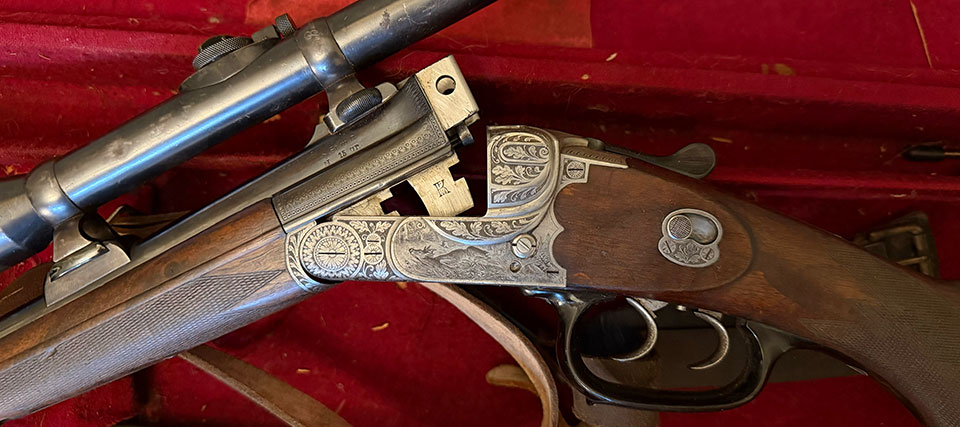
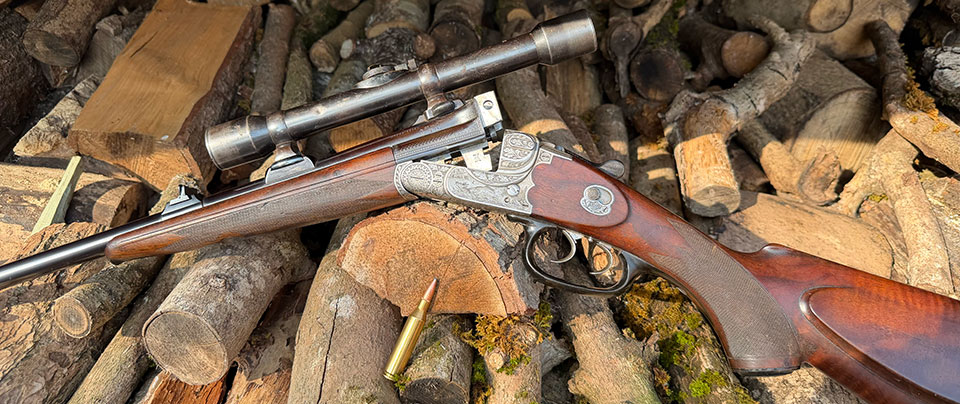
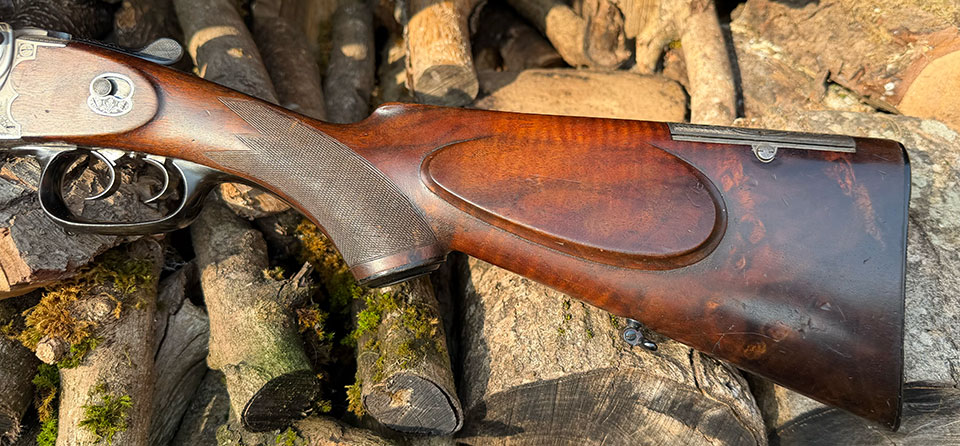
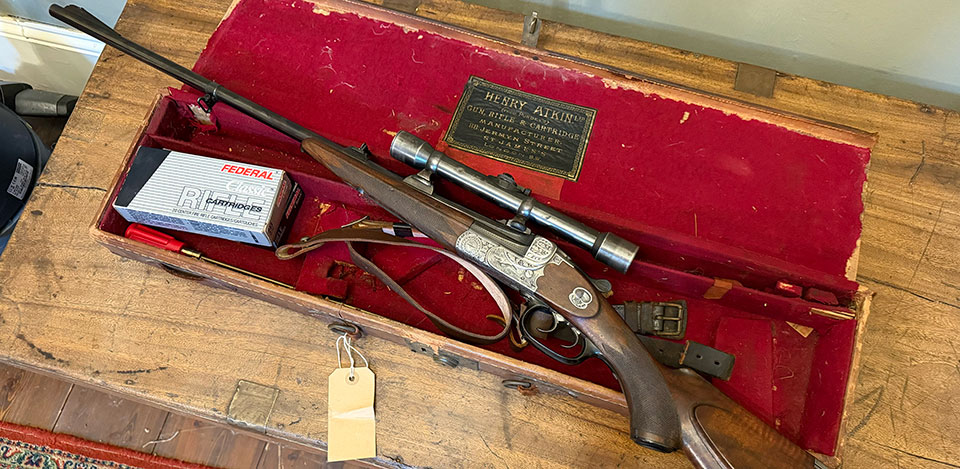
The Kipplauf we see here is by F.W. Kessler. It is a very German looking rifle with twin Kirsten bolts and a beautifully engineered boxlock action with a horn trigger guard and a double-set trigger system.
It started life as an 8x57R but has since been converted to .243 Winchester. The 8x57 Mauser cartridge was always popular in Germany and is well suited to the forest and Alpine game encountered there. It has never been common in Britain.
The Kessler was brought to me by a very aged local sportsman who told me his father had brought it back from Germany after visiting a close friend who owned a large sporting estate there before the war.
The current owner, now in his late eighties, had it converted to .243 as he used if here for roe stalking and thought is useful to have a more readily available and modern cartridge to use.
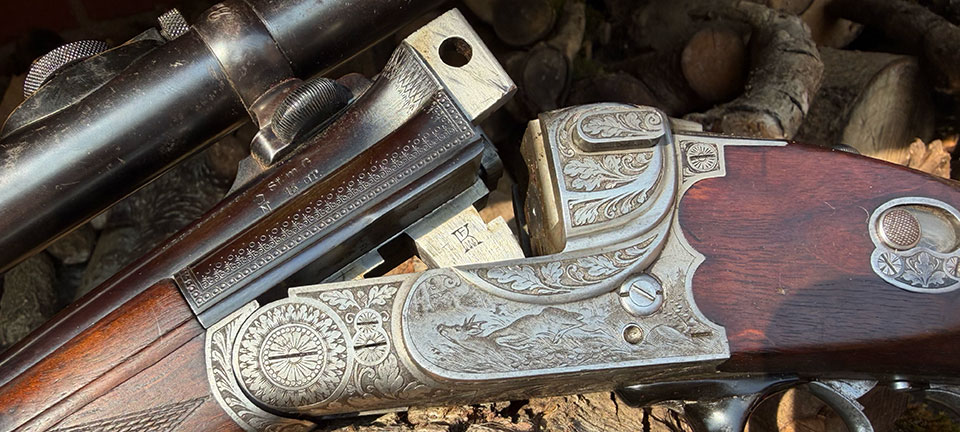
He delivered it to me in a made-to-fit vintage Henry Atkin case, with two boxes of ammunition (part used) and the ‘scope, which is contemporary with the rifle and still remarkably clear.
The mounts are very well made and of the quick-detach type, taking mere seconds to put on or take off and snapping crisply back into place when needed.
Not only is this a rare thing to see in the UK (the British were never very keen on this type of single-barrel rifle, favouring the falling-block type in the days before magazine rifles took over), it is an example of the kind of re-invention that is very hard to get done today.
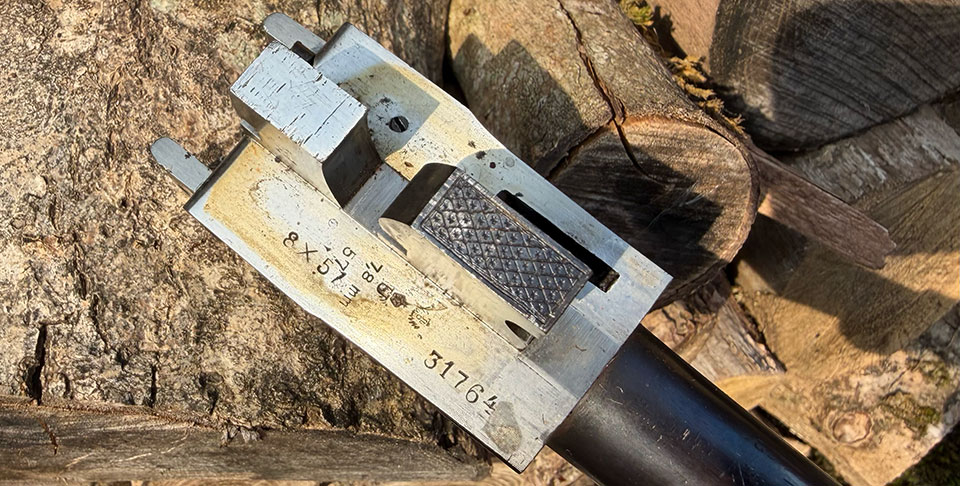
Barrel lining and re-chambering of old rifles used to be a viable customisation project for most owners with a few contacts. Now it is a difficult and expensive prospect even if you can find a gunsmith with the expertise, time and inclination to take on the work.
Happily, the rifle as presented today has benefitted from the work of previous generations and stands as a rare and capable roe stalking rifle of a type difficult to find these days.
The . 243 Winchester is a round that has achieved huge popularity in the UK as an all-rounder for vermin control and deer stalking. Even with the new rules regarding lead bullets, which will be outlawed by 2029, the .243 will still be effective loaded with 85-90-grain zinc/copper bullets, such as Winchester Copper Impact or Barnes TSX for roe deer.
The .243 suits this rifle. It is soft-recoiling, delivers a flat trajectory at roe-stalking ranges and is very forgiving to shoot, even in light rifles. Being popular, ammunition is, and should remain, easily available.
It requires methodical inspection to truly appreciate the quality evident everywhere in this rifle’s build. Continental drillings (double shotgun with under-slung rifle barrel) are not popular here but they too are often beautifully engineered. With its double-set-trigger system and horn trigger guard the Kessler resembles the style often encountered in drillings.
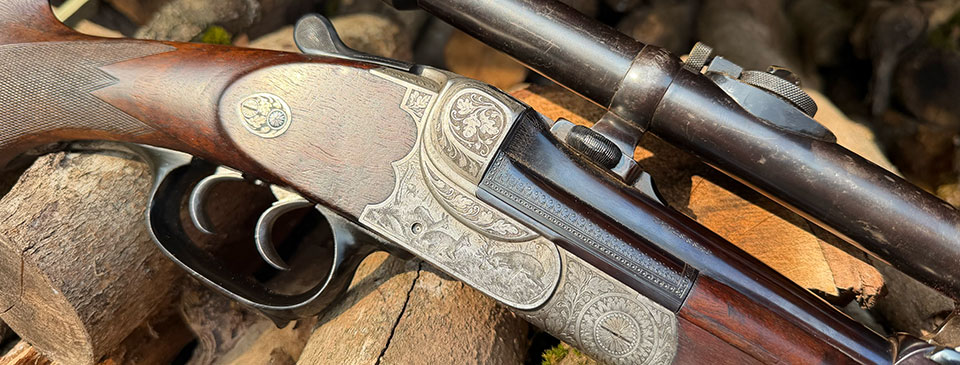
Those horn guards are often found nibbled by mice or insects from storage under beds or in cupboards but this one is pristine.The reason for horn being used in preference to steel is (I have been told) that horn does not feel cold in sub-zero conditions and resting a trigger finger on a well rounded horn guard in such circumstances is much more comfortable.
The engraving is more subtle than some German guns but retains the distinctive themes of forest, oak leaves and roe deer. It is cut in deep relief and covers the entirety of the steel surfaces.
F.W. Kessler of Suhl (1845 to 1919) was a German gunmaker who made rifles for other as well as those bearing his own name. There was also Albin Kessler in the same town, active from 1913 to 1939 and Bernhard Kessler (1875-1952), described as a’minor gunmaker’.
A rifle like this would be extremely expensive to build today and no British gunmaker could undertake the project. A few fine rifle makers in Ferlach still make them but they remain rare and idiosyncratic.
Published by Vintage Guns Ltd on (modified )