Gun collecting, even in a small way, is generally considered to be a not inexpensive hobby.
Enthusiasts will read avidly about the top makers and their best guns and they naturally lust after an example of the very best.
However, even in these depressed economic times, such purchases often represent more financial outlay than the average working man can justify.
My own passion for guns began in childhood. I still remember the fascination I had with stripping simple Webley & Scott bolt-action .410s or Gem air rifles.
When I got my first shotgun, a Webley & Scott model 700, I thought it was the finest gun in the world. To the thirteen-year-old me, it was.
Even today, when perusing auction house viewings, sometimes one of the guns that ‘speaks to me’ is something unremarkable in conventional terms.
These are the guns that we should appreciate and which can form an inexpensive, yet fascinating, collection of usable classics.
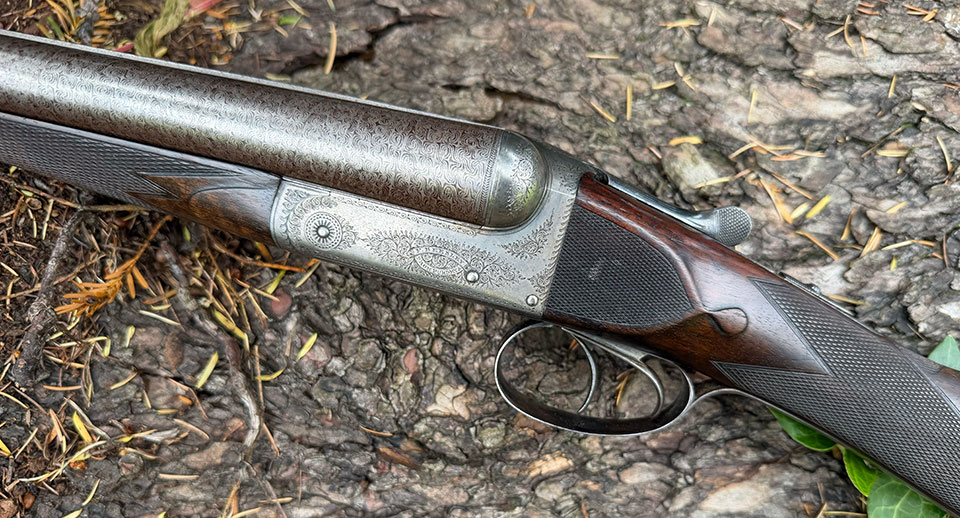
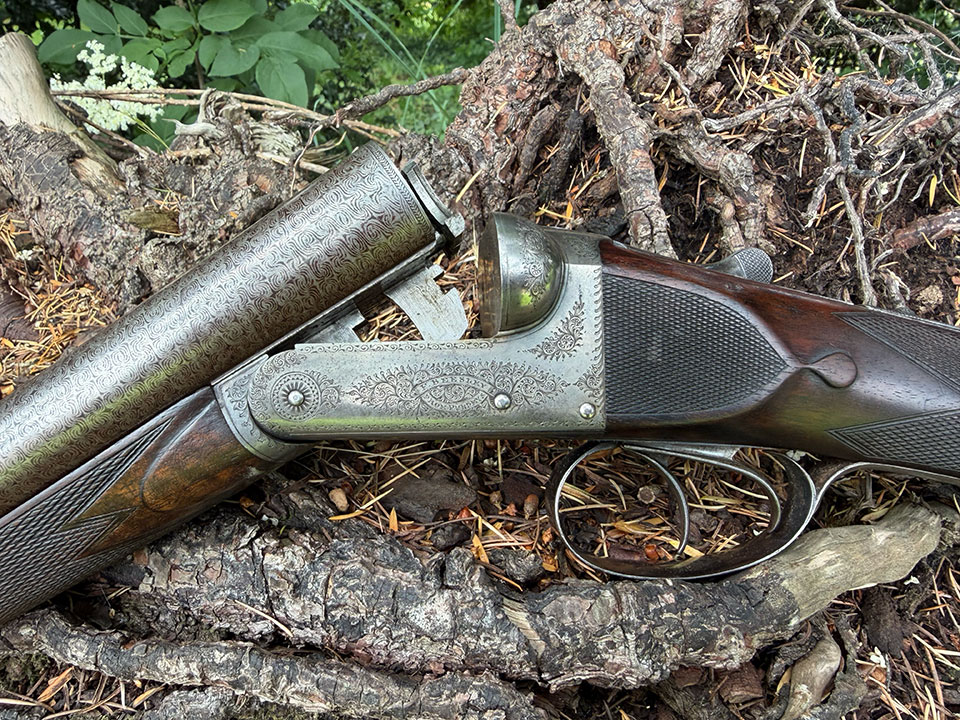
Exemplifying the type is this Beesley boxlock non-ejector, which I recently bought from Gavin Gardiner’s auction. Boxlock non-ejectors are about the least desirable guns on the market. So, here is the ultimate expression of value.
When buying at ‘budget’ prices, we need to be aware of the high cost and difficulty of getting good gun-smithing work done. A cheap gun quickly becomes an expensive gun if you have to spend twice what you paid for, it fixing it.
This Beesley attracted my attention for reasons of its obvious quality, the amount of original finish it retained and for the fact it needs absolutely no work. Take it home, put it in the rack and shoot it.
The Beesley name adds some interesting historical texture. This is what inevitably happens when you buy an old gun; looking into details makes it more interesting. Every revelation adds to your appreciation of the object and breathes life into it.
For those unaware, a quick word on Frederick Beesley. He was a stocker by trade and worked for James Purdey in London from 1869 to 1878. In 1880 he invented what was to become the modern Purdey self-opening side-lock.
The Beesley spring-cocking mechanism is a work of genius and he sold it to James Purdey in order to help finance his own newly established business at 22, Queen Street Edgware Road. It was a good deal for both men. Purdey had the most sophisticated and refined best sidelock in the trade and Beesley had working capitol to expand and consolidate his business.
Beesley openly advertised his status as ‘inventor & patentee of Purdey’s hammerless gun’ and in the early years of his independence put; ’F. Beesley (from Purdey’s) on his own guns (apparently with Purdey’s blessing).
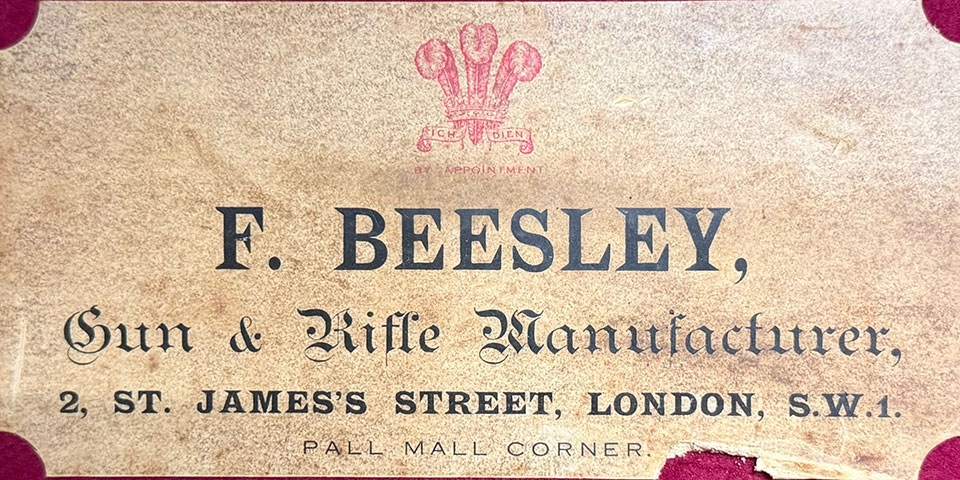
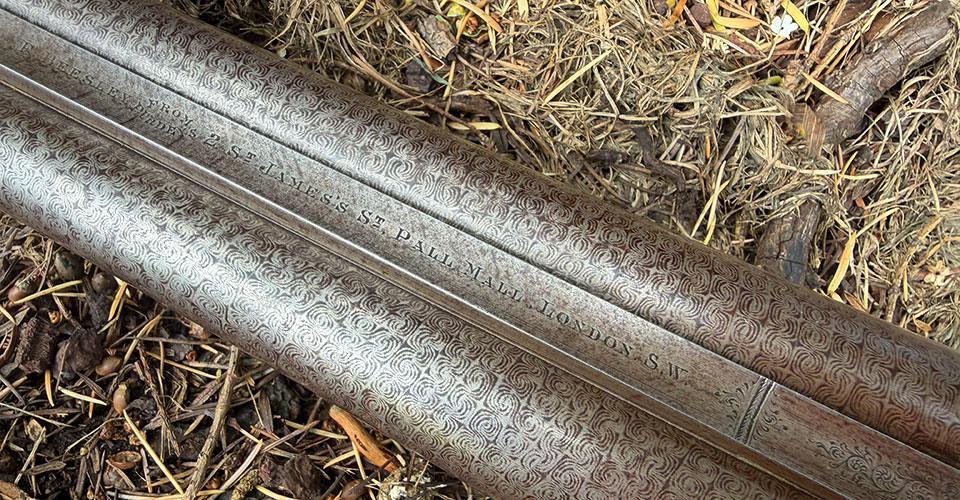
Beesley died in 1928 and during his lifetime traded from 22, Queen Street, Edgware Road, then moved to 85, Edgware Road (in 1884) and finally to 2, St. James’s Street in 1891.
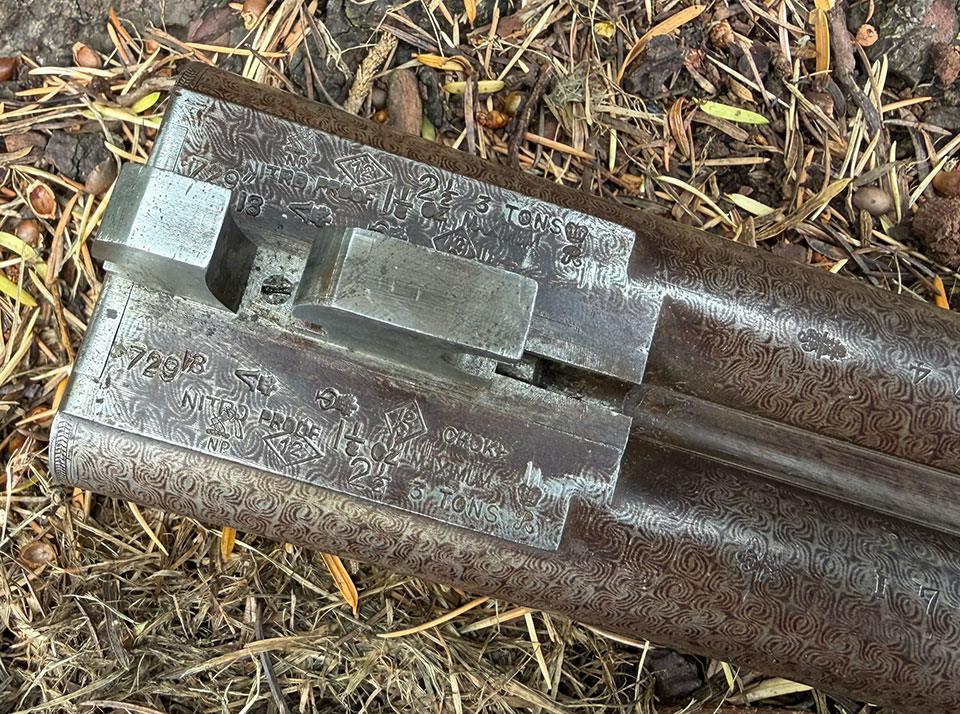
This Anson & Deeley action ‘boxlock’ non-ejector was made in 1902 and sold to a Mr. L. Molesworth for the sum of £21. Later, it was re-purchased and sold to Lt. Col. H.P. McGlover, a British artillery officer awarded the Military Cross in 1918.
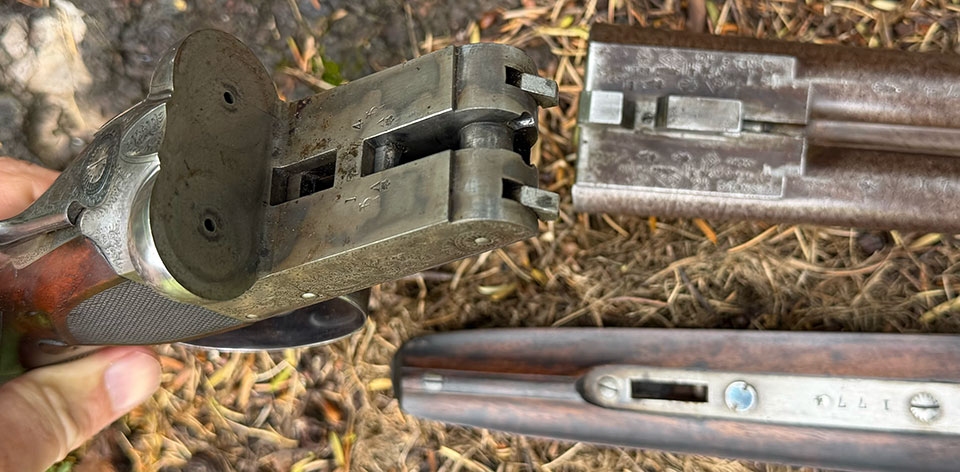
It lacks two things in particular that make it a good budget buy. Firstly, it has two triggers, rather than one and secondly, it has no ejector system.
This configuration provides a good deal of reassurance that it will not go wrong. Ejectors and single triggers are potentially expensive things to fix.
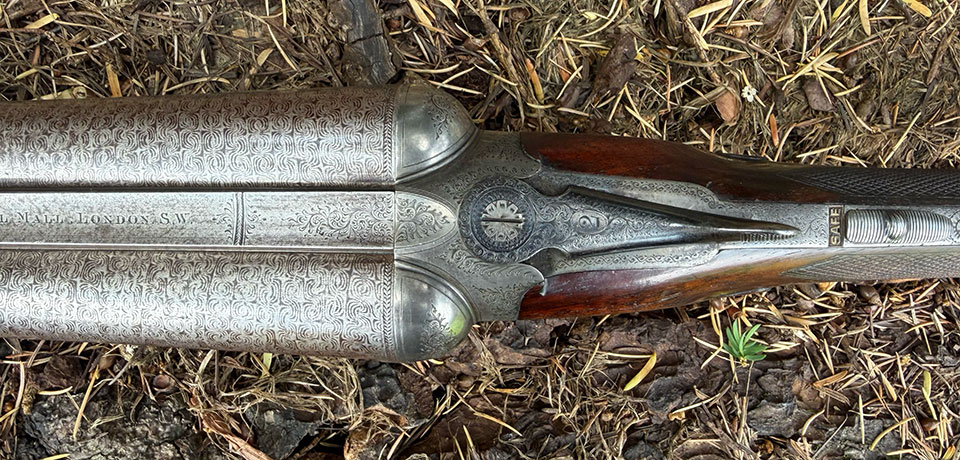
The gun has 30” Damascus barrels, it has been nitro re-proofed and has the original 2 1/2” chambers. Chokes are Quarter (right) and Five -Eighths (left). The browning is original.
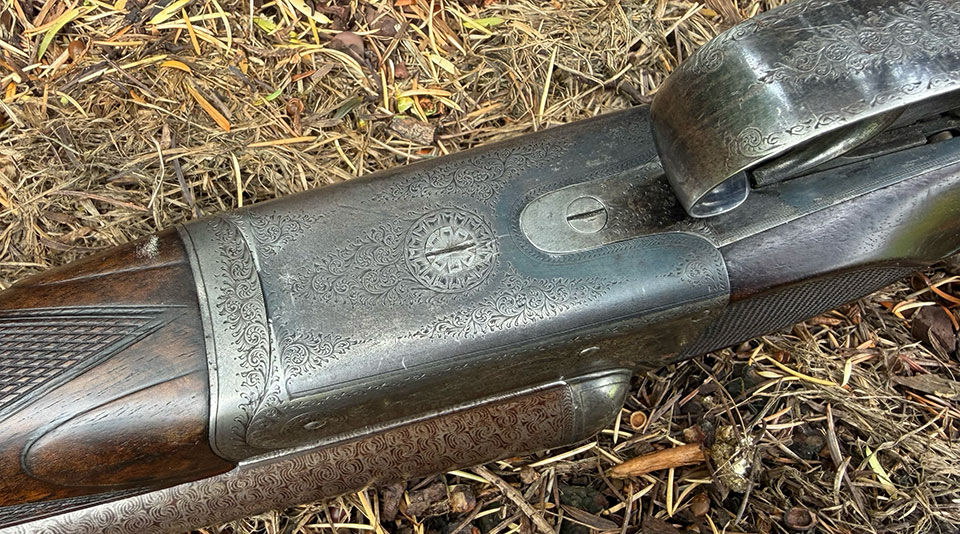
The action is finely engraved with scrolls and the maker’s name in a banner and it is stamped ‘2’, showing to to be one of a pair. Pairs of twentieth century boxlock non-ejectors are very unusual.
The action and other steel parts all retain traces of original finish and the gun shows little evidence of re-working or alteration.
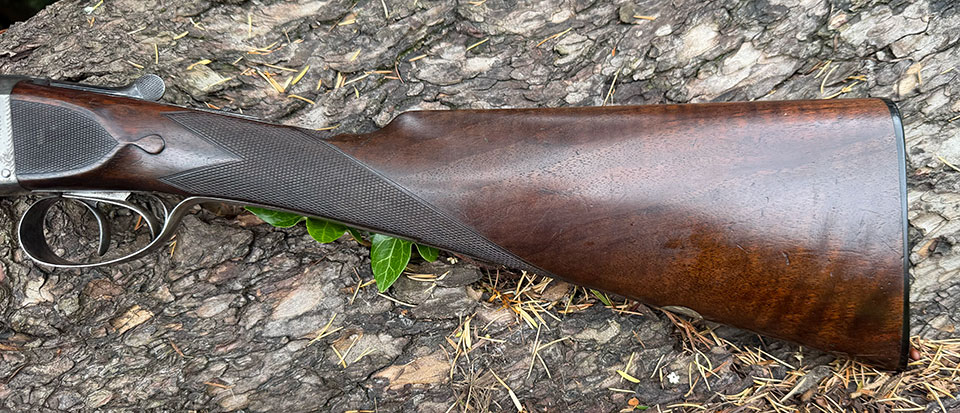
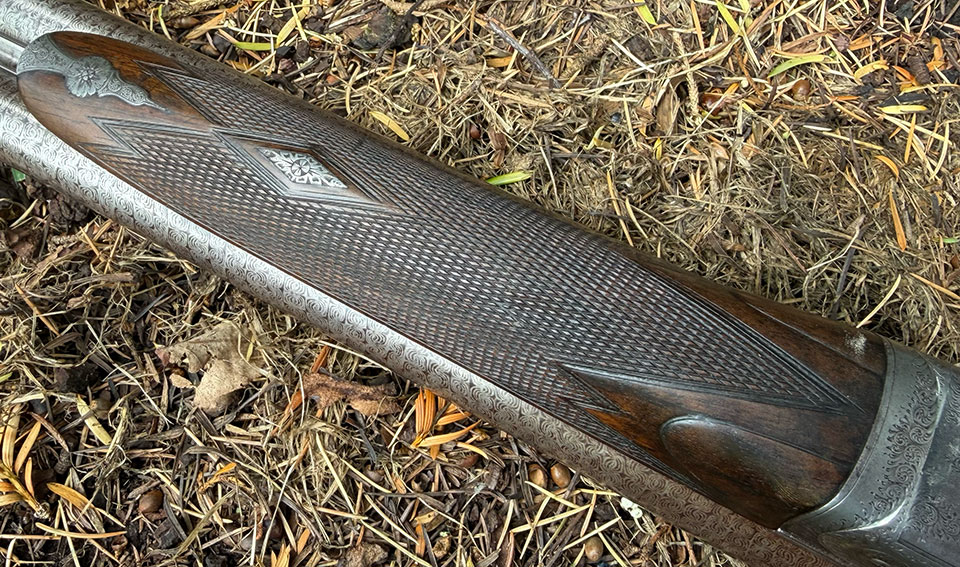
The stock colour and figure has deepened and dimmed with age and patina but the proportions are well executed and the details like shouldered forend wood, chequered side panels and drop-points indicate the care involved with creating a gun of quality, not just a utilitarian boxlock.
I'm told by a reliable source that this gun is one of twenty boxlocks ordered in 1902 by Beesley, for finishing in London, from Birmingham gunmaker John Harper. Harper also made the 'John Robertson' branded boxlocks sold by Boss.
Current condition is all important when buying at the lower end and the Beesley fits that criterion, being re-proofed, with clean bores and barrels nicely on-face.
With its original stock length of 14”, the gun weighs a mid-weight 6lbs 6oz, which is typical for a normal game gun of the time. With one-ounce (28-gram) loads it should perform very well, though we now have excellent, soft-recoiling, 12-bore cartridges available in 65mm cases and loaded with 24 or even 21 grams of shot.
These are excellent for walked-up shooting in the woods or hedges and even better for practice or simulated game shoots.
With all fees paid, the Beesley cost me what we might call a modest sum. It is a beautifully made, high quality gun from a maker who was among the very best of his era. It has some interesting history and remains in excellent condition.
This is an example of a gun to buy for the pleasure of use and ownership. It is not a prospect or an investment or a commodity. The value of this type of gun has fallen so much that they are again in within reach of the true enthusiast, even if his passion outstrips his pocket.
While dealers and speculators may find this distressing, the upside of the weak market is that real enthusiasts can once again buy beautiful things and enjoy them.
I hope readers will now look at high quality boxlock non-ejectors more carefully and with a little more respect. They deserve it.
Published by Vintage Guns Ltd on (modified )