When I first started working with freelance gunmakers, in the late 1990s, I was in my early thirties. The men I met and who helped me build my business, and develop my knowledge of the vintage British guns about which I had always been passionate, were mostly in their mid-to-late fifties.
I met masters of their craft like David Sinnerton, David Becker, Bill Blacker, David Dryhurst, Richard Tandy, Stephane Dupille, Mark Sullivan and John Gibbs. I have learned from every one of them but one man stands out as my earliest and foremost friend and ally in the quest to uncover and restore old Victorian shotguns, use them in the field and pass them to my customers all around the world. That man was David Mitchell.
I met David at Holt’s in around 1999, when Chris Beaumont pointed me in his direction, as I sought advice about an 1889 Purdey side-lock I was interested in buying. Dave was kind and patient and helpful when he need not have been. I was nobody to him then.
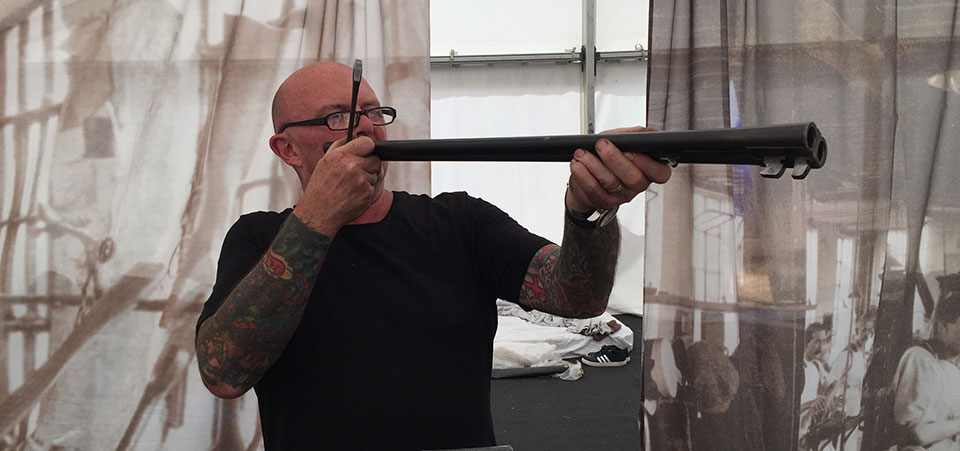
I did buy that Purdey, it was my first. I still remember the number; 13136. I had it fitted by Mike Yardley and shot very well with it for a few years. It was the gun I went to when I wanted to feel confident or had not been shooting well. I knew if I just let auto-pilot takeover and did not think too much, the gun would look after me.
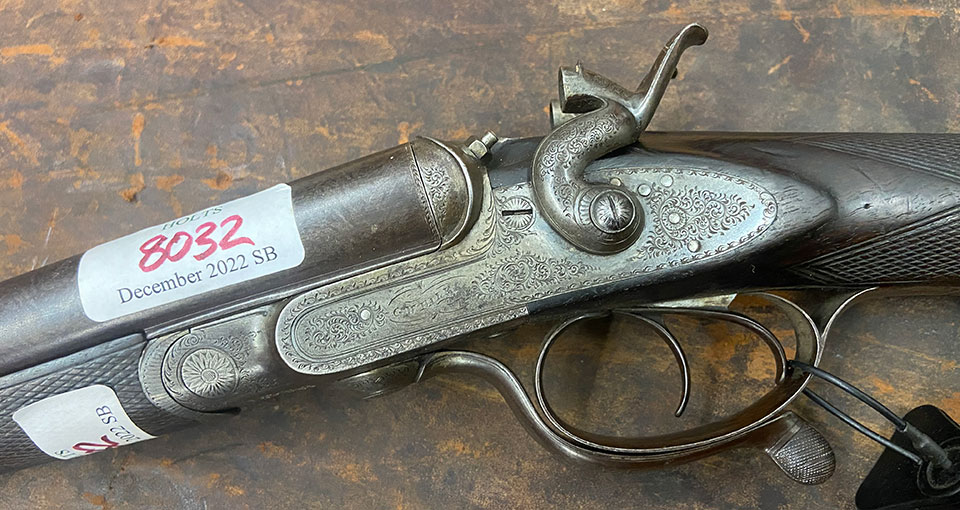
Only when I realised that my Purdey was being left in the cabinet while I invariably favoured an old J. Thompson hammer gun I had bought for £50 from Bates of Stafford and which Dave Mitchell had put back into service for me, did I sell it (for twice what I paid - those were the days!).
That was the first of many projects that Dave and I did together. The Thompson was a nail. It was pitted, filthy, had the wrong forend bodged onto it, no chequer left, the wood was black and the rib loose. Dave indulged me because I saw something in the gun and he saw it too.
He re-jointed it and proofed it for 70mm nitro in London, re-shaped the forend wood, chequered the hand, somehow rediscovering the old, almost disappeared, drop points and bringing them back.
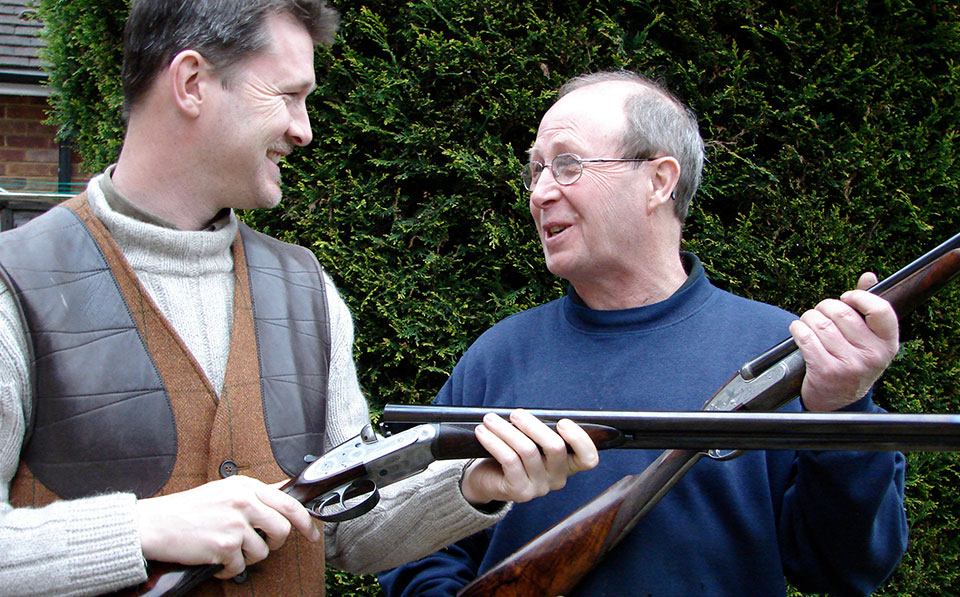
He had the forend iron engraved to match the action, filled a hole in the bar and had that engraved, papered-up the stock and removed the scratches and dents and allowed me to oil finish it; gently offering a bit of guidance and critiquing the finish as it developed.
That was a hallmark of Dave’s approach to my development. Stock finishing was a task I became mildly obsessed with and once I mentioned to Dave that I had stopped using grain filler and thought I got a better finish without it, though the process took a lot longer and required more rubbing-off. He smiled and said “Well done, you found that out for yourself then”, before offering some advice on technique and process that helped progress my skills further.
Dave would never spoon-feed but when he thought a bit of help had been earned, he would know just what to say to nudge me to the next stage.
Dave shared my passion for the older guns and had a genuine love and appreciation for the work we uncovered when, for example, stripping an 1870s hammer gun and finding, hidden in the grime, perfectly shaped, filed and burnished springs and bridles. “These men were working by gaslight and look at what they produced, it’s staggering”, he would say. High praise indeed for man of Dave’s skills.
Dave never planned to be a gunmaker, he was just a sports-mad working class teenager. It came about by chance because a neighbour had a connection to Purdey’s and suggested he could arrange an interview. Dave was, at the time, employed painting boat hulls in Regents Park.
He arrived in front of Harry Lawrence that summer of 1963 and was inspected, then told he could be an engraver. However, when he reported for duty a few weeks later, he was told they had a vacancy for an apprentice in the Finishing Shop, so that is where he was sent. Upon accepting his apprenticeship he actually took a pay cut from the boat painting job!
Harry Lawrence, had started his apprenticeship in 1914,
Apprenticing as a gunmaker in the 1960s was challenging for the young lads; as it was for the older men. The old-timers in the factory were basically Victorian in their attitudes, while the apprentices were mods and rockers experiencing the rise of the swinging sixties. Dave’s boss, Harry Lawrence, had started his apprenticeship in 1914, when the Beesley spring-cocking side-lock was a mere thirty-four years old and the Woodward over & under just one!
Dave learned his craft from men like this. They passed on their skills with the traditional gunmakers’ tools that had been used since the days of hammer guns. Painstaking, meticulous, systematic. There was no training like it and Dave stayed at Purdey until the mid 1980s, working in the finishing shop, the repair shop and setting up the lock-making shop when Purdey brought that in-house.
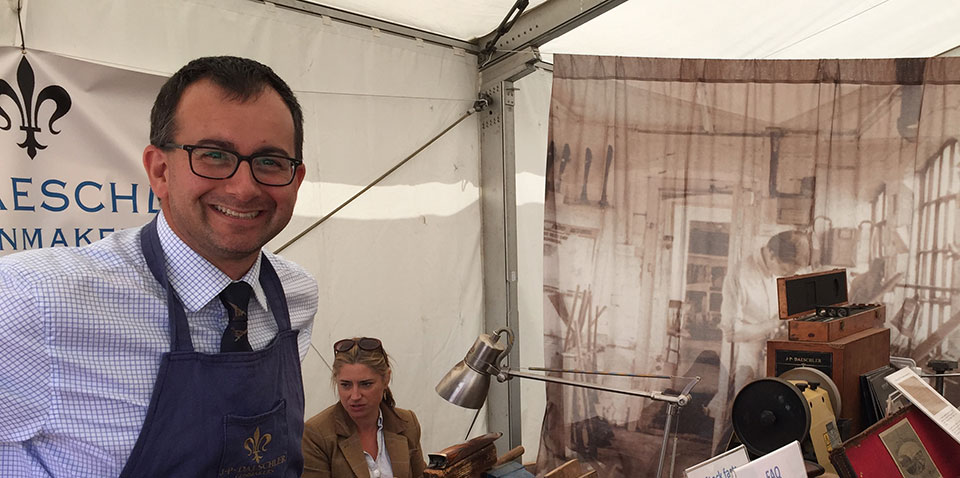
When I met Dave he had thirty-six years experience and was familiar with every facet of the classic British guns that we restored. Anything from early 1870s hammer guns through the odd transitional side-locks and trigger-plates of the 1880s and ‘90s to various boxlock types and the major side-lock actions used by all the big makers in the early twentieth century. Odd single triggers, dodgy ejectors, Dave managed to work them all out.
Back then, I could confidently tell a customer that we could, if he was prepared to pay the cost of the work, do anything that might be required to bring an old gun back into service.
Dave would often tell me that he had been awake at night mentally working out how to solve a problem an old gun might be causing us. Sleeping on it delivered the solution and even the worst, most complicated and messed-around old mechanisms were saved and made reliable.
he could overcome any mechanical issue with a bit of lateral thinking
To Dave, gun-making was not just a job, it was his genuine passion and he loved proving that he could overcome any mechanical issue with a bit of lateral thinking, a phone call to some old friends to chew it over and the application of his rare talents through the archaic contents of his workshop.
Through my collaboration with Dave over a period of twenty-five years, I learned an enormous amount about the workings of the vintage sporting guns we brought back to life, used, bought, sold and marvelled at.
In 2025, Dave retired, after sixty-two years at the bench. At Purdey he helped make new ‘best’ guns, which now grace the collections of sportsmen around the world. As a freelance finisher, he worked on new guns for every big name in the country. and as a restorer of our gun-making heritage he has helped put countless beautiful Victorian shotguns into collections and into the hands of passionate sportsmen from Dulwich to Dallas.
I’m now in my late fifties and as I see Dave’s generation retire, I can no longer tell customers that we can do anything and bring their old guns back into service. The generation of gunmakers now in their thirties did not grow up repairing Purdeys, Greeners and Dicksons, their bread and butter has been the Continental over & under. If they have worked on English guns, their breadth of knowledge is often limited to the modern version of one or two popular models.
Many of Dave’s peers were happy at the bench but had no interest in dealing with the public. They mostly did trade work and were happy to. Today’s young gunmakers are social media savvy, they have Instagram pages and websites. They also know that working with one pair of hands and a finite number of hours in the day, they make more money doing work for the big manufacturers, who deliver, for example, a new side-lock ready for stocking or finishing. It will arrive as expected, take a certain amount of time to get to the next stage and move on.
No late-night musings about how to make a 1905 Woodward’s single trigger stop malfunctioning, no phone calls to fellows to discuss the possibility of locating a special width flat rib for an old 16-bore pigeon gun.
Such activity cannot be invoiced; it is inefficient. I cannot blame the younger generation for being smart. I do lament the passing of the older generation whose entire inner world was dedicated to fixing the conundrums presented by arcane mechanisms, within the interiors of ancient firearms.
The quarter century that Dave and I worked with vintage guns together perhaps embodied the last of the golden years of enthusiasm for the products created during the inventive heyday of British sporting guns.
shooters grow up with foreign, machine-made over & unders
Prices today are depressed, younger shooters grow up with foreign, machine-made over & unders and they live in a world of low maintenance and disposability. To them, a gun is like an iphone, a pair of skis or a lawn mower; something to be used and put away, not a life-long companion whose beauty and mechanical excellence should be treasured, maintained and marvelled at for a lifetime.
Legislation looks set to further restrict the easy access to shotguns we have, hitherto, enjoyed. Collections will be harder to justify and maintain in the face of police and political hostility. A ban on lead shot will certainly make sporting ownership of Victorian and Edwardian shotguns less viable and the reduction in numbers of gunmakers able or willing to service and maintain them puts yet another nail in the coffin of the kind of lifestyle I and my customers have enjoyed; taking ancient guns and rifles into the field and shooting game as our great-great-grandfathers once did.
My concluding entreaty, as I mentally wave goodbye to Dave Mitchell’s generation of wonderful gunmakers, is to throw down the gauntlet and challenge, even implore, those young talents emerging in the gun-making industry today to take an interest in the work of their forebears, cherish the heritage they have left behind, take inspiration from the excellence they produced with the most basic of tools and keep those old guns in the field long into the twenty-first century.
Published by Vintage Guns Ltd on