Provincial gunmakers claiming the name 'The Purdey of ...' were not entirely unique. I have heard devotees of W.R. Pape of Newcastle call him 'the Purdey of the North' and William Powell is sometimes referred to as 'the Purdey of Birmingham'.
What this, however spurious, title does correctly identify is that the wares of these non-London firms often surprised sportsmen expecting lower quality to find quality comparable with London's best.
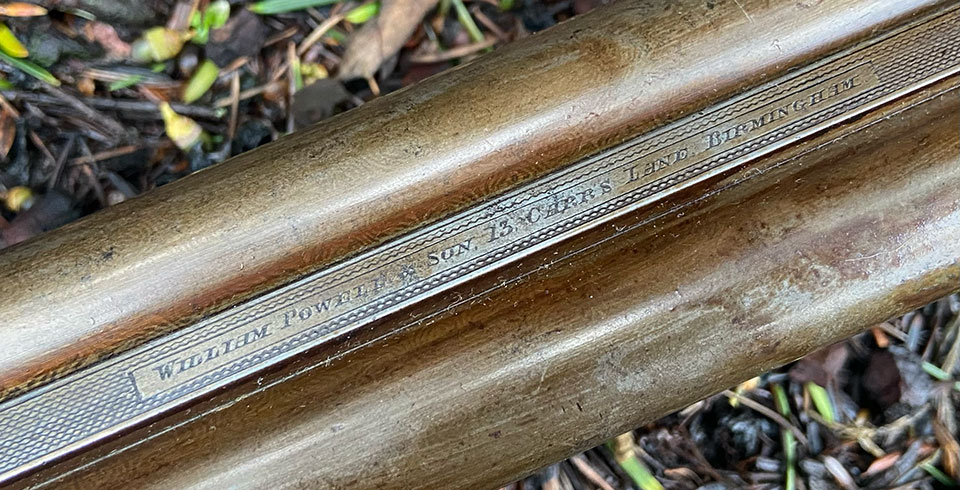
William Powell, formerly of 13, Carr's Lane, Birmingham, was a maker of very fine guns indeed. Being Midlands-based these days, I see quite lot of Powell's wares.
Local gentry seem all to have one or two and Powell, like Westley Richards, was, for many years, a trusted supplier of shooting requisites and gun repairs and servicing, until relatively recently.
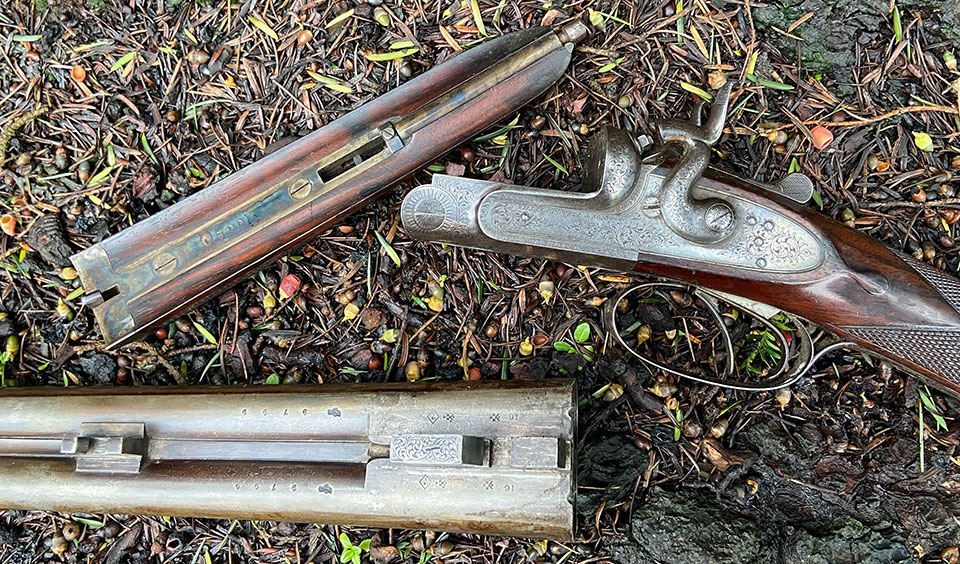
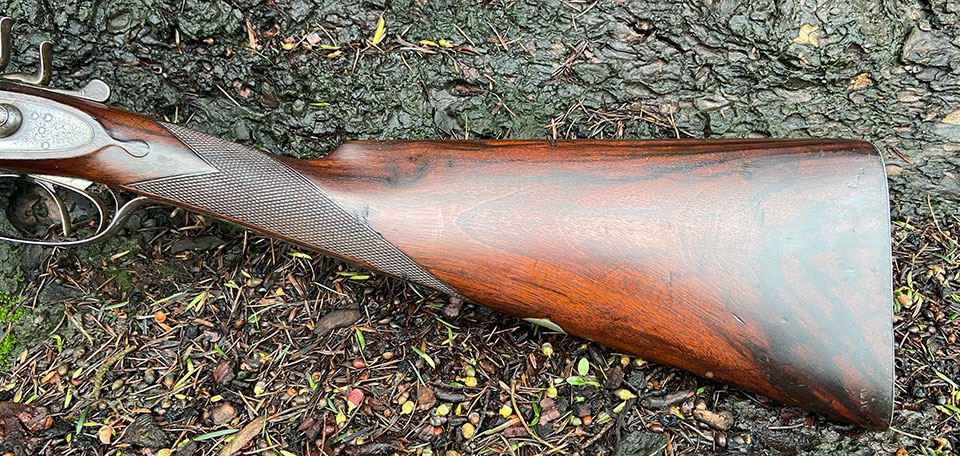
The gun pictured here arrived recently along with four or five scrappers. While not in good condition, the quality stood out from the rest. It is a bar-action hammer gun with rebounding locks, top-lever operation and it sports 30" Damascus barrels. The stock is an unusually long 15 1/4" to the steel butt-plate.
It bears serial number 9799, which dates it to 1896 and it is proofed in Birmingham for black powder. Chambers are 2 1/2" and it is very much a typical best-quality game gun of the period. The only unusual thing about it is the, smaller than usual, 16-bore, given that it was clearly bought by quite a tall man.
While 12-bore was the commonly-held best choice for a grown man to use (hence the standard smaller bore being short in stock and barrels) it was not unusual for an older man, or one who had become infirm and wanted to carry a lighter gun, to opt for a 16-bore or 20-bore. Perhaps that was the case with the man who ordered this one.
He may just have liked the 16-bore, which is a very good choice if one plans to shoot a one ounce load. It gives very good patterns and can be made stronger than a 12-bore of the same weight.
I mentioned that the gun is not in good condition. I may have been unkind. It is certainly dirty and neglected of late. However, it does not look very much used and neither has it been modified or repaired a great deal.
The chequer is original and still clear. There are traces of the original case colour throughout the gun and the barels are still tight on the face of the action. It opens and closes with a nice firm 'click' and feels very nicely synchronised.
Locks snap to 'cock' deciseively and trigger pulls are crisp.
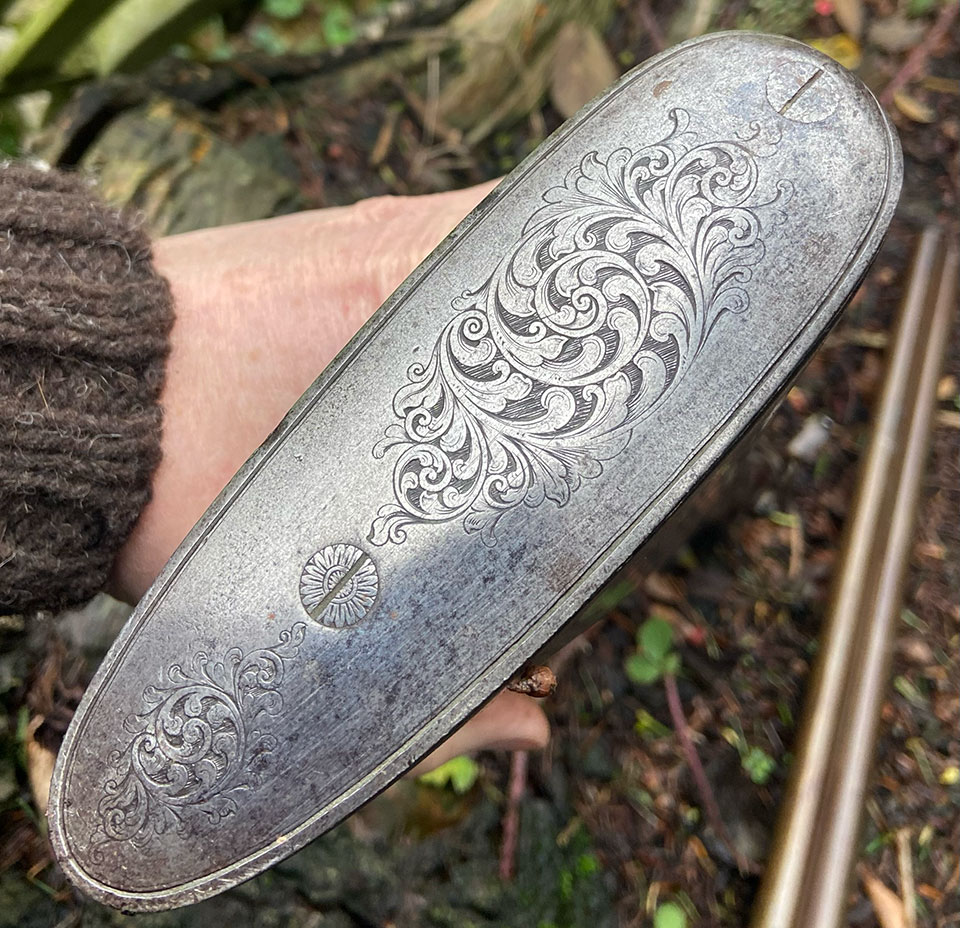
Despite the dirt and grime, and a little frosting on the face, around the striker holes, the original colours are visible on the beautifully concave bar, which is a marvel of action-filing. The Purdey double-under bolt slots into its bites firmly and fits snugly.
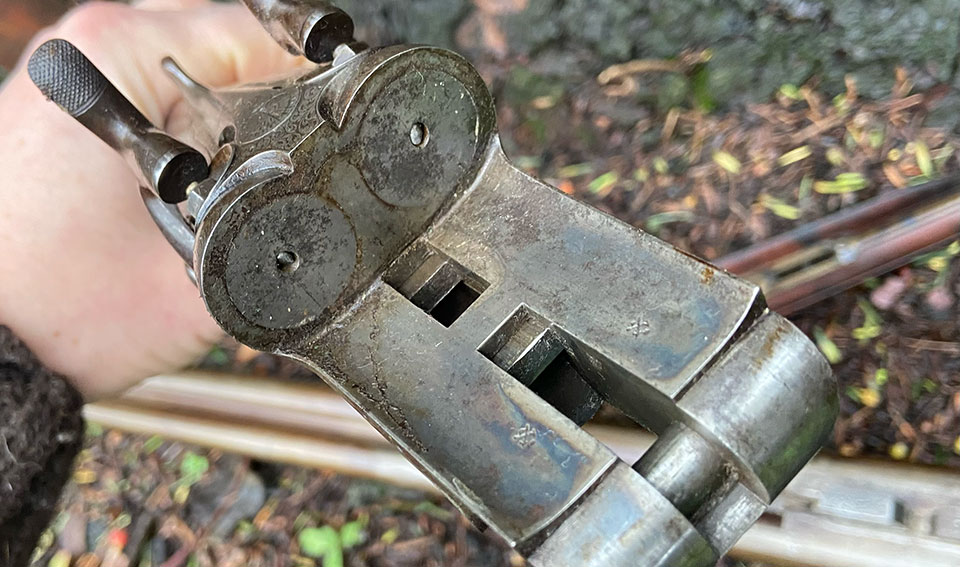
The wood remains slightly proud of the steel and, although profusely dented and scored, the stock and forend are sound and unaffected by oil ingress or obvious wear.
The gun has graceful lines and comes to the shoulder naturally, with a good, predictable swing and muzzle-control evident in the handling characteristics. This is not one of those small bores that you lose control of due to absence of feel.
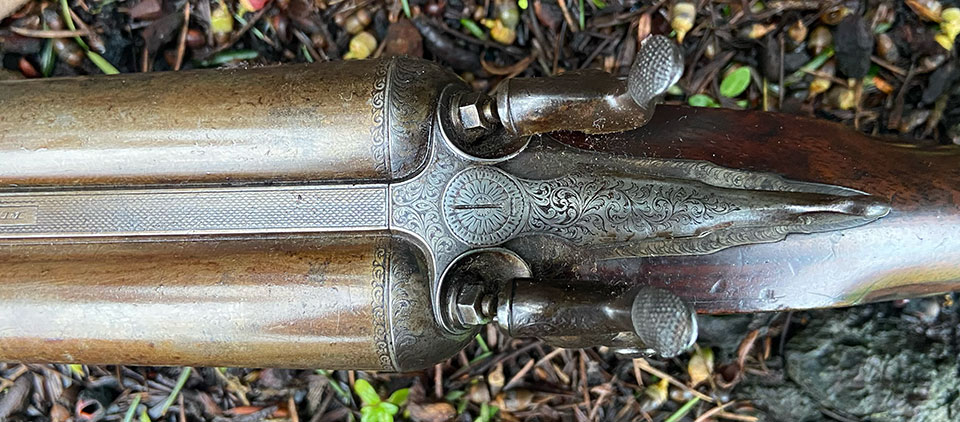
The gun's downfall is the barrels; they retain decent thickness but there are some nasty sharp dents that will be tricky to get out and the exterior has been battered and oddly browned and varnished. Since taking these photographs, it has been sent to the workshop for dent raising, barrel polishing and re-browning, as well as a full strip and clean.
Restoration is a matter of taste and these days I tend to keep as much of the gun's original character and patina as possible. Some people like to try and make their old guns look like they just came out of the factory but that never looks convincing to me.
it will be illegal to sell lead shot cartridges after Summer 2026
I hope the old Powell will restore well enough to join my 16-bore Grant side-lever in the rack and accompany me on future shooting expeditions. It does not owe me a great deal of money and the owner, a non-shooter who had inherited it, was expecting to scrap it.
As we head into the impending lead shot ban (it will be illegal to sell lead shot cartridges after Summer 2026) we must contemplate alternatives. I have already splashed out on a good stock of 16-bore bismuth game loads.
If you normally shoot an ounce (28g) of No.6, then, if you buy bismuth, opt for the same weight load of No.5 shot. Bismuth is lighter than lead so an ounce of bismuth contains more pellets than an ounce of lead, Shifting up a shot size compensates largely for the reduced density of the bismuth.
Times change but we go on! Many people are jettisoning their old guns but for as long as I can get my hands on beauties like this, I will continue to put them back into service and take them out shooting.
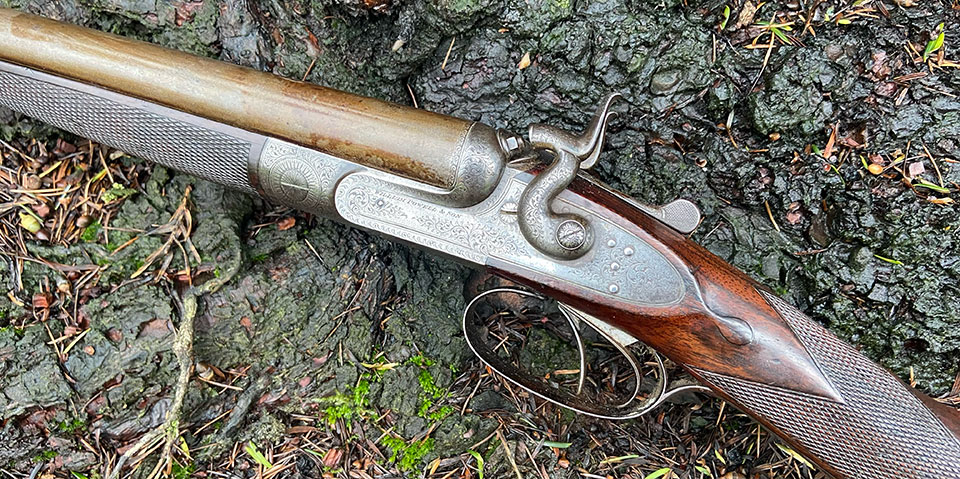
Published by Vintage Guns Ltd on