The year 1986 might seem rather recent for an article in the Vintage Gun Journal.
I even remember the year. I was nineteen, had just been handed some seriously unimpressive A-level results and was wondering what to do with myself.
I was the proud possessor of a 1976 Honda 550/4K motorcycle and spent the summer at Glastonbury and other festivals before embarking on a four month hitch-hike around Europe (still divided by the Iron Curtain), carrying a small tent and £40 in cash.
Thinking back, I was, like many a teenager before and since, a bit lost, trying to work out what my place in the world might be and really not having any clear idea of what to do to find out.
My shotgun at the time was a Webley & Scott (Model 700) 12-bore, which I still have and, interested in guns as I was, the thought of a Purdey lurked permanently in the back of my mind as the shotgun I should one day possess.
Like most people with even a casual acquaintance with shotguns, a Purdey represented the best of the best. It was a Rolls Royce in firearms form. I deserved one.
Unfortunately, I was rapidly discovering that the world might not agree with my sense of entitlement to a Purdey, a high paying job which required nothing more than my presence, the public’s recognition of my singular brilliance, nor a life of artistic and intellectual fulfilment. Certainly not without some effort and application on my part.
While I was musing on my uncanny similarity to both Jim Morrison and Thomas de Quincey, elsewhere, Thatcher’s Britain had just started to flex some muscle. The Stock Exchange was deregulated in October 1986 and the M25 London Orbital motorway opened.
The Andrew, formerly known as Prince, married Sarah Ferguson and Nigel Mansell won the British Grand Prix. While unemployment still wobbled around 3.4%, and the country felt very divided, the YUPPIE generation was once again discovering the joys of opulent consumerism and Purdey was once again starting to make better shotguns and hoping they would buy some.
At around £10,000, a new Purdey side-lock cost about the same as a VW Golf GTI and that is the environment in which this gun was created.
The remarkable thing about Purdey (and several other British gunmakers) is that even their modern guns (unless you count the ‘cheap’ trigger-plate ‘Sporters’) are vintage guns.
They are made to be just like a 1920 gun, but new. Very few mechanical sporting objects have retained that degree of originality.
It should be no surprise, therefore, that this 1986 Purdey is the same specification Purdey would deliver today if you ordered one. It would cost about £190,000-£200,000 if you were to do so.
What is more remarkable is that this gun looks new - apart from the odd blemish on the wood work, which would also be as good as new, if a decent finisher spent a couple of weeks with it.
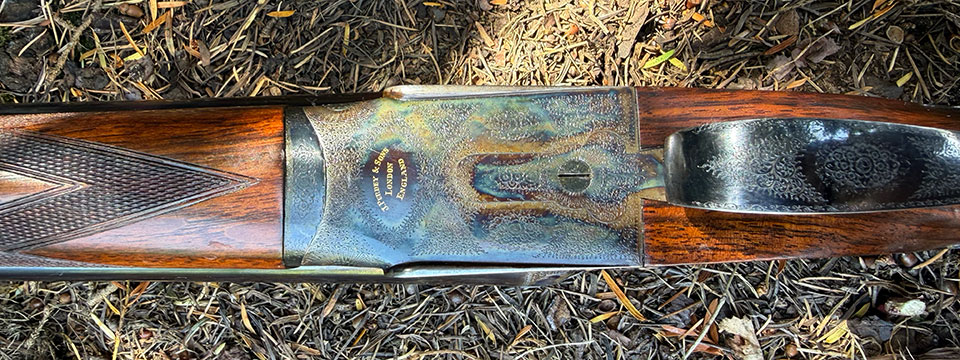
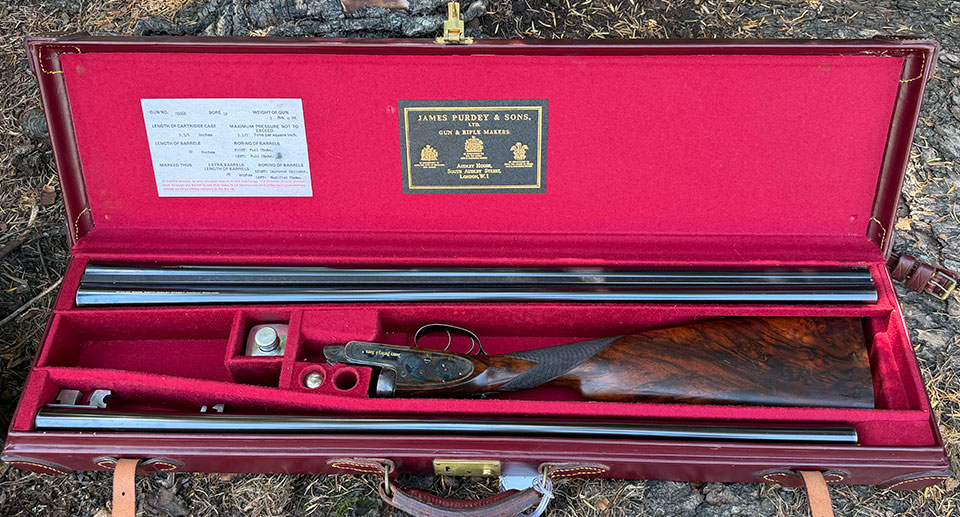
Here it sits, in its original case, with its two sets of barrels, looking unused. Whoever ordered it had a clear purpose and knew what he wanted from his guns.
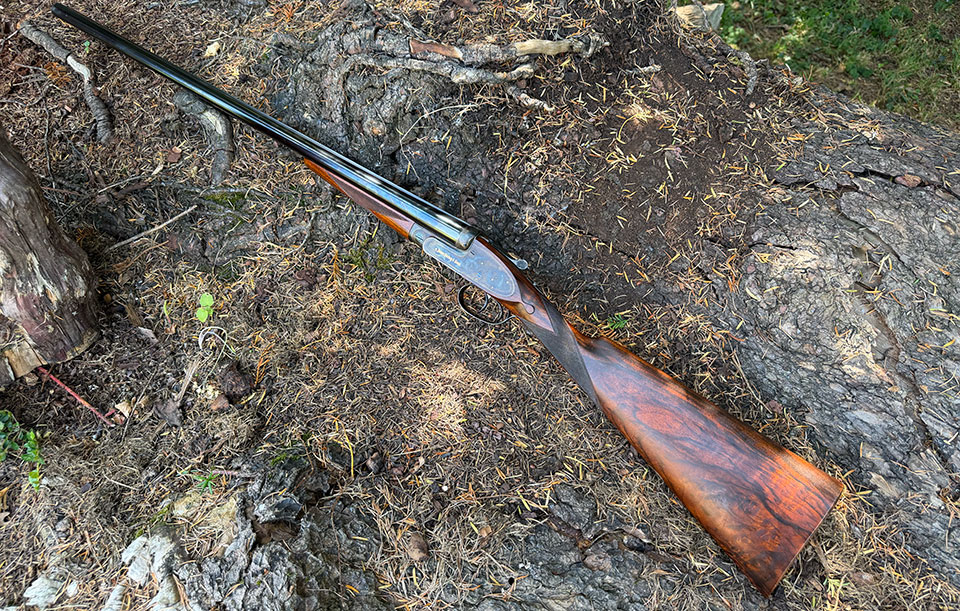
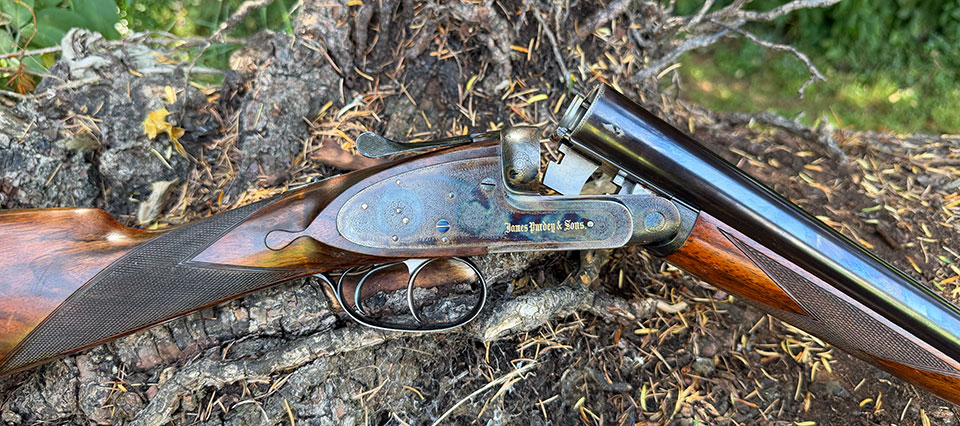
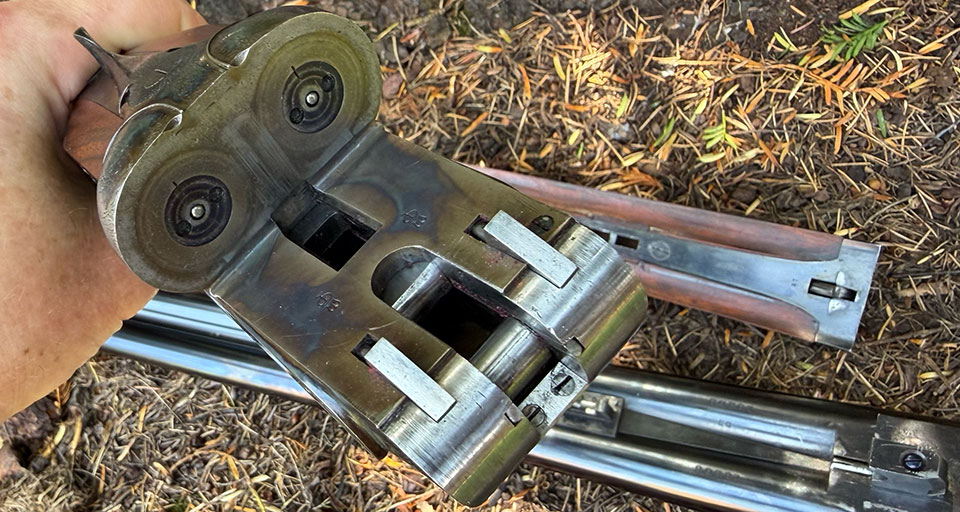
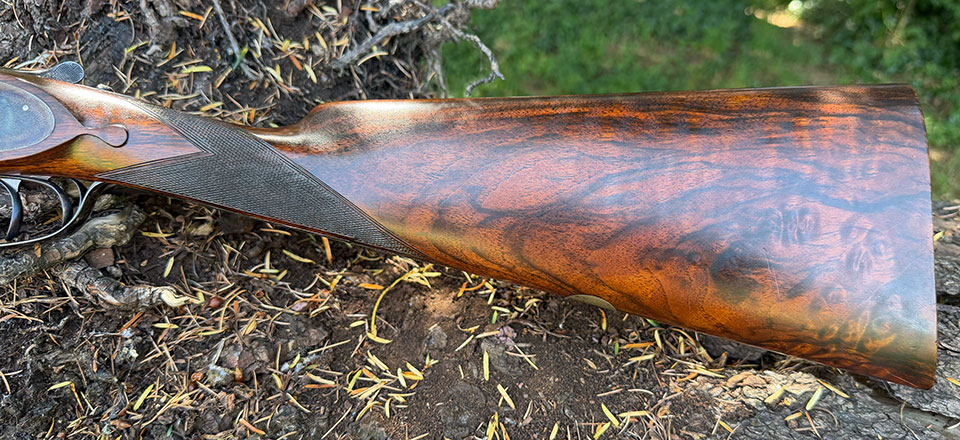
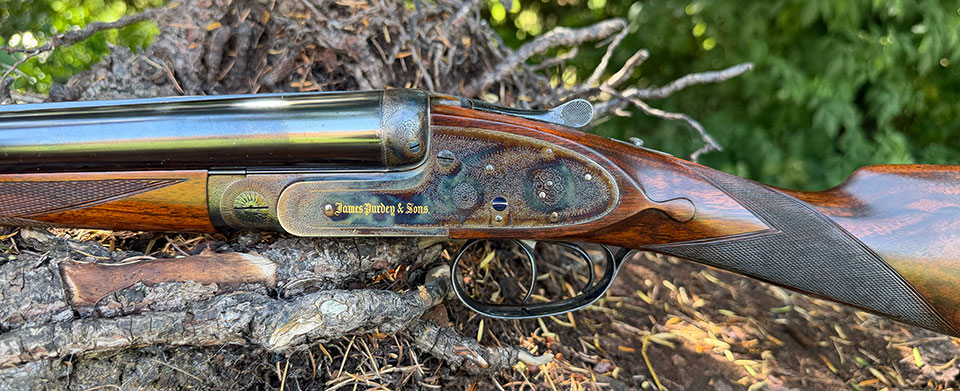
The stock is classic Purdey, with straight hand, dark walnut and fine chequer panels. The action is the familiar Beesley patent, self-opener, fine rose & scroll engraved, and resplendent in the original case colours, with its protective varnish still in tact.
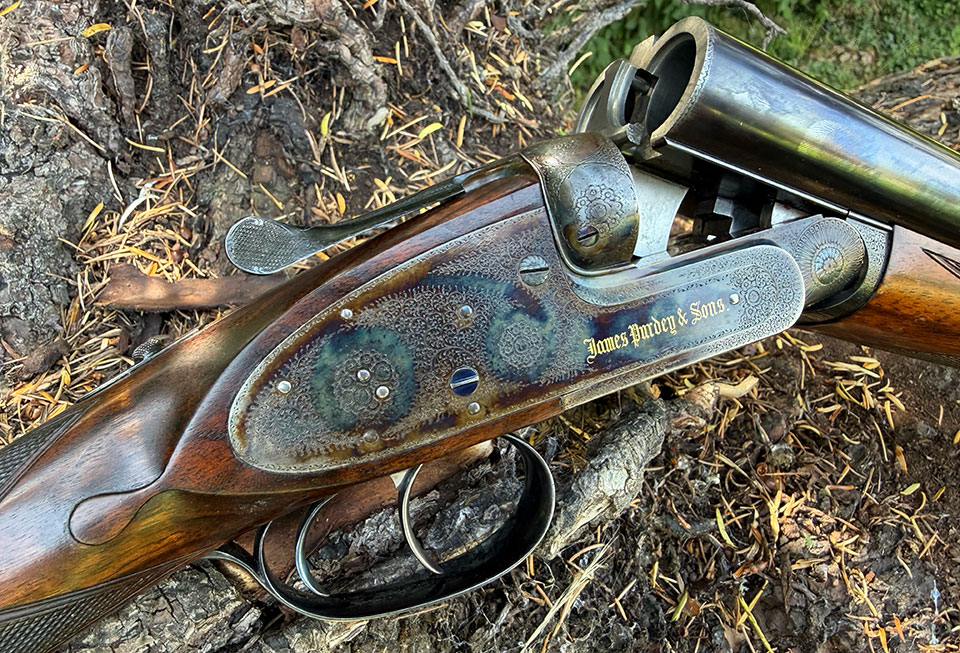
It is not quite the classic Purdey game gun. It has peculiarities. Nice ones.
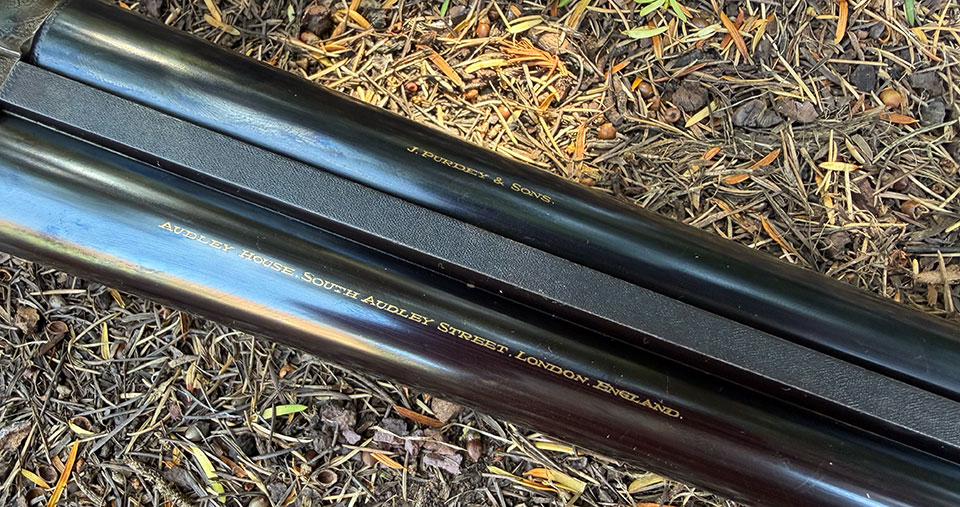
The barrels are there to serve different purposes. For tackling high pheasants the 30” tubes deliver a smooth swing and the narrow, flat top, stippled rib make for a good sight picture. Choked Full & Full, they are intended for pulling down tall pheasants on expensive driven shoots.
Should the quarry alter to grouse or partridge, the 28” barrels, choked Improved Cylinder in the right and Modified in the left produce a nice open pattern for birds coming hurriedly into view straight ahead and a tighter pattern for the second shot at a departing covey.
Chambers are a flexible 2 3/4” (70mm) and the weight; a flat 7lbs 0oz, allows for a wide range of cartridge choice, from Gamebore Black Gold 36g to Eley select 21g, depending on circumstances.
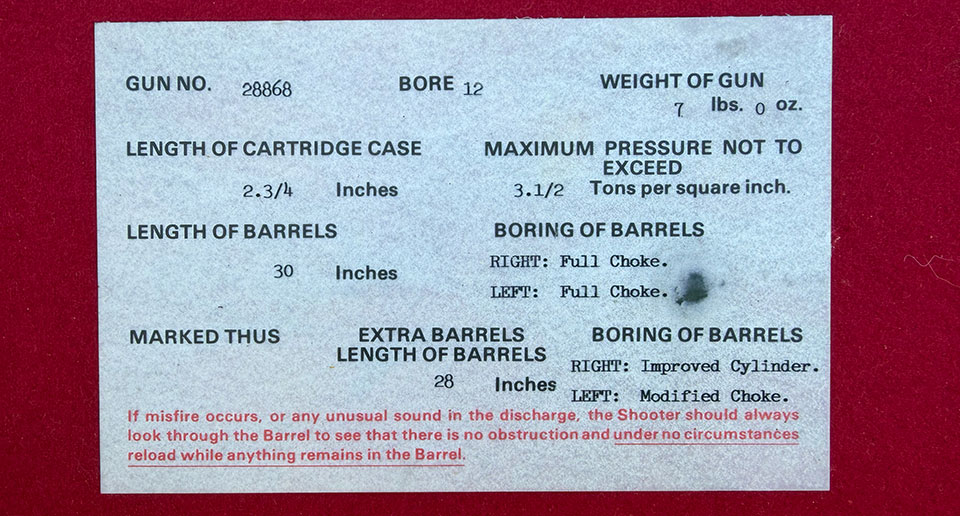
Steel shot was not a concern forty years ago. The full chokes are not suited to modern steel-loads. So, bismuth is the obvious choice, delivering much better, much closer-to-lead performance, anyway. It would be possible to open the Full chokes to Half to accommodate steel shot but why buy the best gun in the world and put inferior ammunition through it?
This remarkable ‘80s time capsule represents extraordinary value compared with new cost and it is available immediately. I think 1986 me would be pretty impressed to hear that 2026 me would be in possession of this gun.
Diggory Hadoke
Published by Vintage Guns Ltd on