Back in the early 1990s, Holland & Holland, like several other British gunmakers, were looking for a way to sell more guns to more people.
The ‘Royal’ side-by-side, using the 1922 patent self-opening mechanism, the simple and reliable Holland /Southgate ejector and a conventional and straightforward bar-action side-lock action was (and is) perhaps the best configuration for a British side-lock ejector on the market.
I personally prefer the Purdey but there is a reason so many other firms have copied the Holland & Holland and very few have made copies of the Purdey.
The ‘Royal’ over & under was also a superb gun and between them they offered customers a choice of excellence whatever configuration they preferred.
The barrier to sales was cost. Both these models were very expensive and many, even fairly affluent shooters could not afford them. The temptation to tap into that market was irresistible and management told the production team (under Peter Boxall) to come up with something new that adopted the best qualities of the browning B25 and the Beretta 687.
The thinking was, that if there was a reasonably priced Holland & Holland that was as reliable and as good to shoot as these two very popular ‘mainstream’ guns, they would do brisk business.
From this beginning, the ‘Sporter’ emerged and joined the Holland & Holland line-up. However, rather than borrowing from the Browning and the Beretta, the production team came up with their own creation.
Largely machine-made, with the aid of the, then novel CNC and spark erosion technology that was then entering the gun trade, the Sporter has demi-lump barrels. If one were to liken it to other models, it has split hinge pins, like a Beretta or Woodward, and locks rather like a Boss.
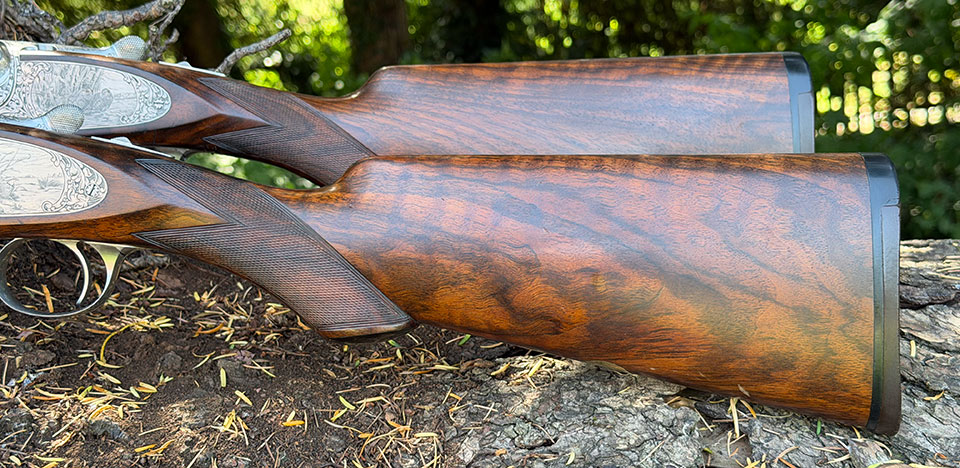
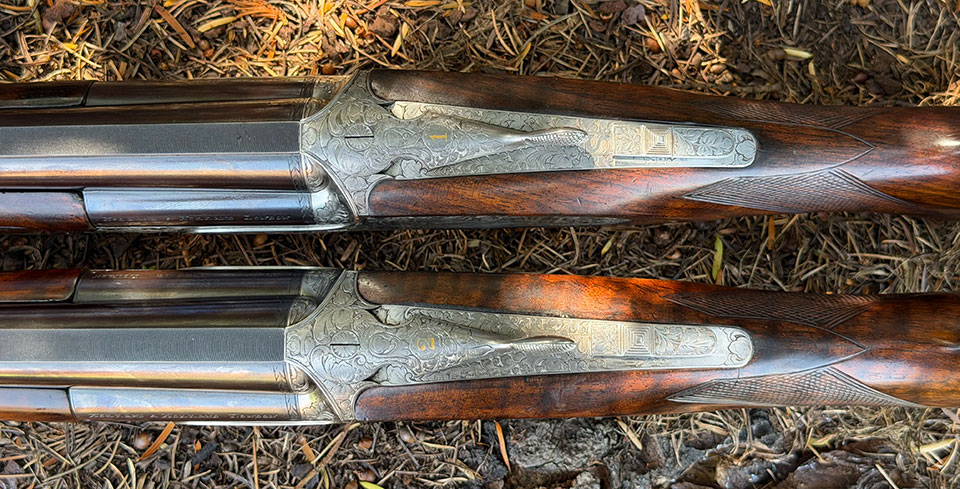
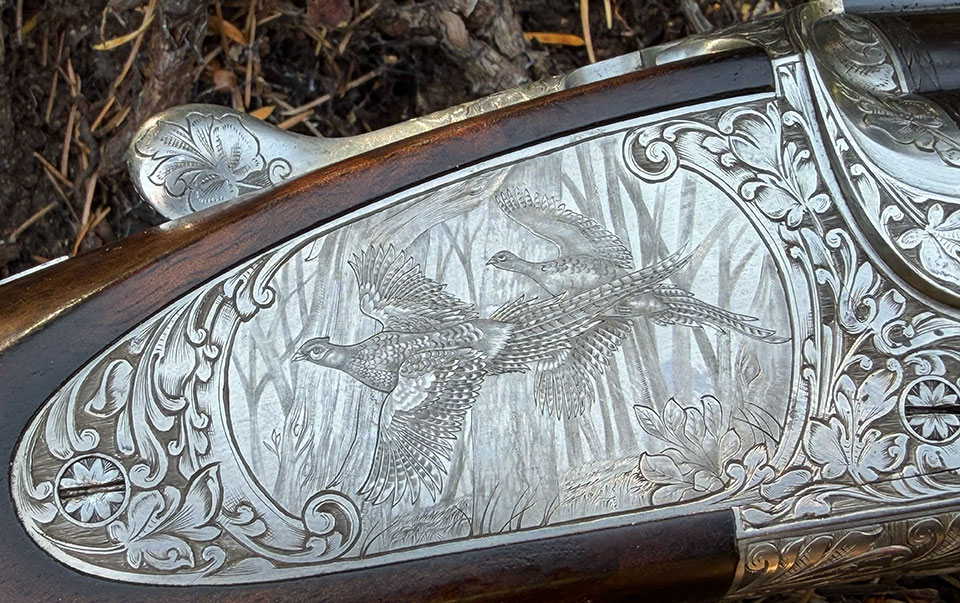
The removable trigger-plate locks are rather Perazzi-like and it uses leaf sprigs, rather than coil springs to power them. It is side plated in the manner of a Beretta EELL model, allowing more surface for engraving and a more traditional English look.
Mike Yardley, when he tested the Sporter for the shooting press, praised both the handling and the barrel quality, likening to to a ‘more pedestrian mass-made over & under but more refined’, which is basically what Holland & Holland were looking for.
Unfortunately for H&H, the perils of designing a new gun, rather than copying a proven model, are often only manifested once the rubber hits the road, as they say in motoring circles.
Of the first fifty Sporters made, forty-nine were returned to the factory for remedial action. What was different about the one gun not returned you may ask? That was the one Holland & Holland had retained for their own gun library!
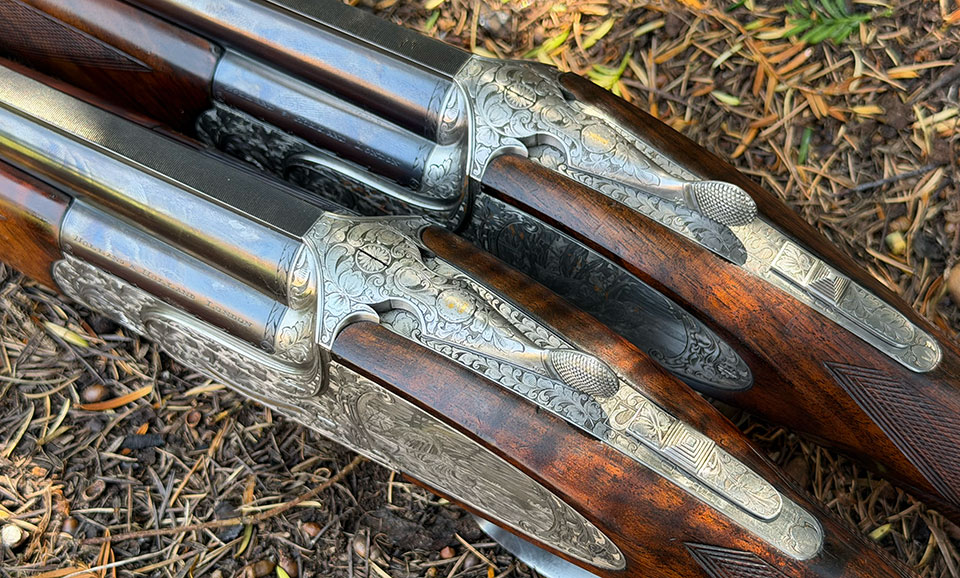
The two main issues included poor striking, which was traced to the angle of the tumblers. The factory re-fit replaced these with new ones. The other, more damaging and expensive, problem was cracked stocks.
The shape of the back of the action caused recoil to split the wood. A retro-fit steel insert had to be fitted to prevent this, ideally before the damage occurred. Replacing a cracked stock basically killed any profit made from the sale. An expensive lesson learned, I’m sure.
After these difficult early years, the Sporter bedded into its character, secured its place, and has remained a key part of Holland & Holland’s range.
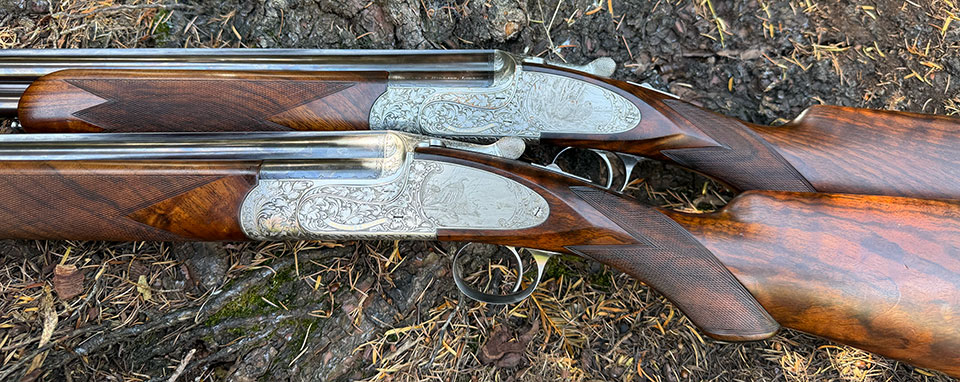
This pair of guns was made in 1996, has been modified to fix the stock cracking issue and has performed good service ever since. Now, thirty years later, the guns remain in very good order.
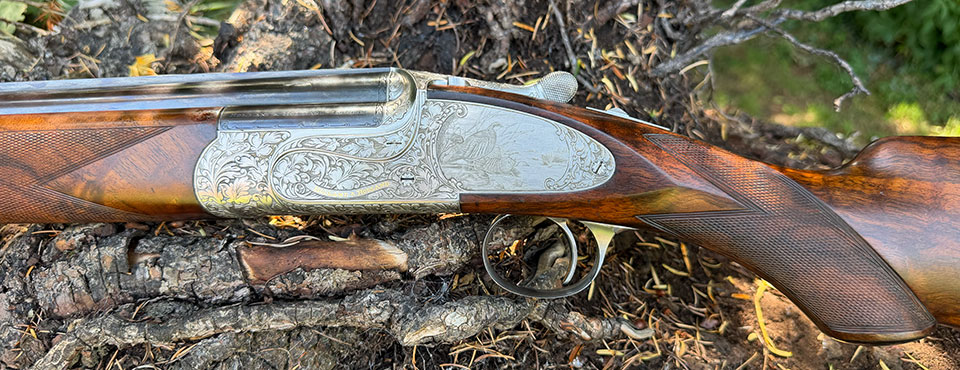
With their 30” barrels and Teague chokes they are flexible companions for all manner of game shooting and with their 70mm chambers, could handle steel shot, if suitable cartridges were combined with the more open choke choices.
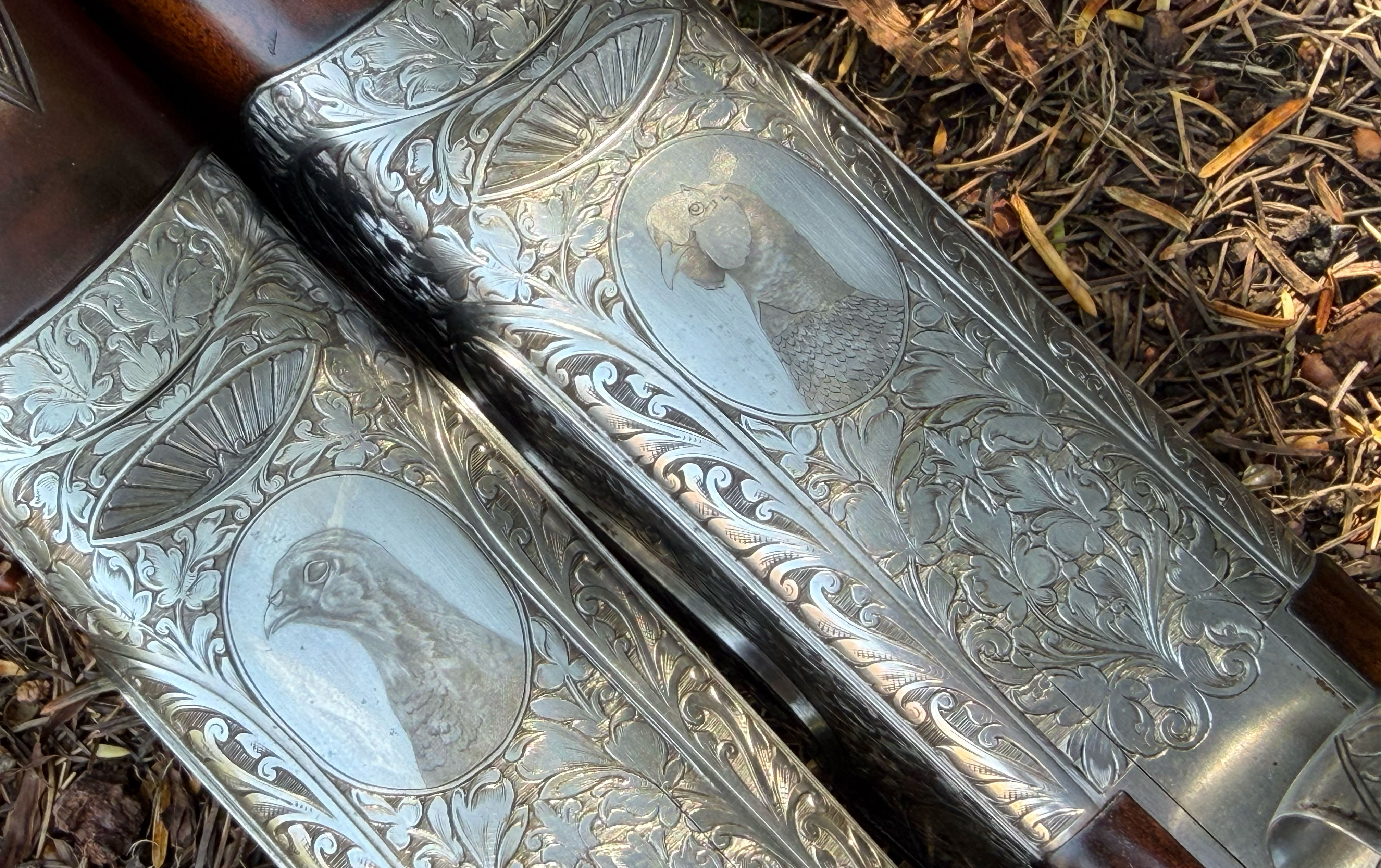
Cased, as original, and with nice, long stocks and rather pleasing scroll and game-scene engraving, they are a practical, and remain a more affordable, means of entry into the London-made over & under scene.
Diggory Hadoke
Published by Vintage Guns Ltd on (modified )