A very nice example of the most common type of Westley Richards hammer gun came to my attention recently, when it was offered for sale. I'm always surprised by the way the market under-appreciates these lovely and unique sporting guns.
Externally, it was in excellent condition, with a nice patina and a fair balance of wear and original finish. Granted, the left barrel wall measured a little under the notional recommended minumum, at 19 thou' but the old girl was in good order and had years left in it as a game gun. These days, guns like this tend to get used a dozen times a year, mostly in good weather, and they get looked after properly.
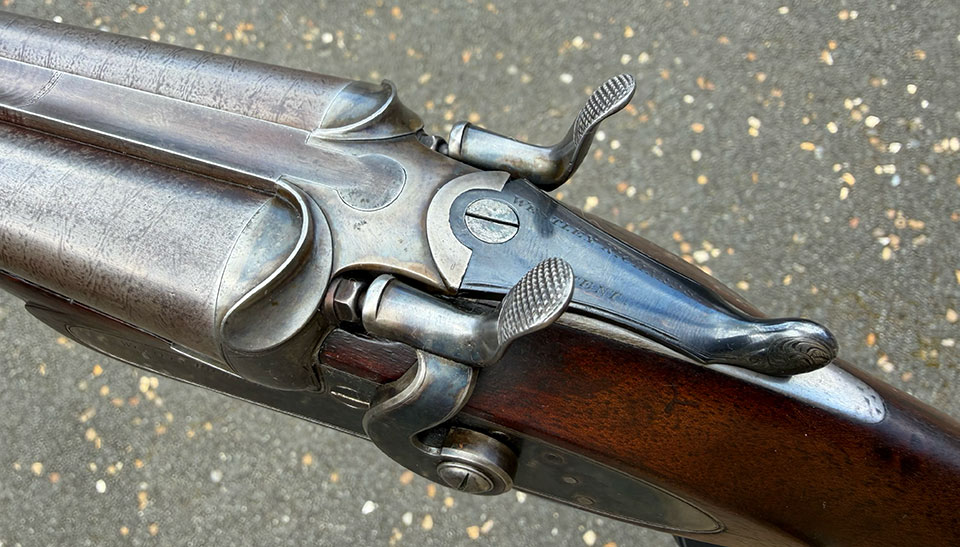
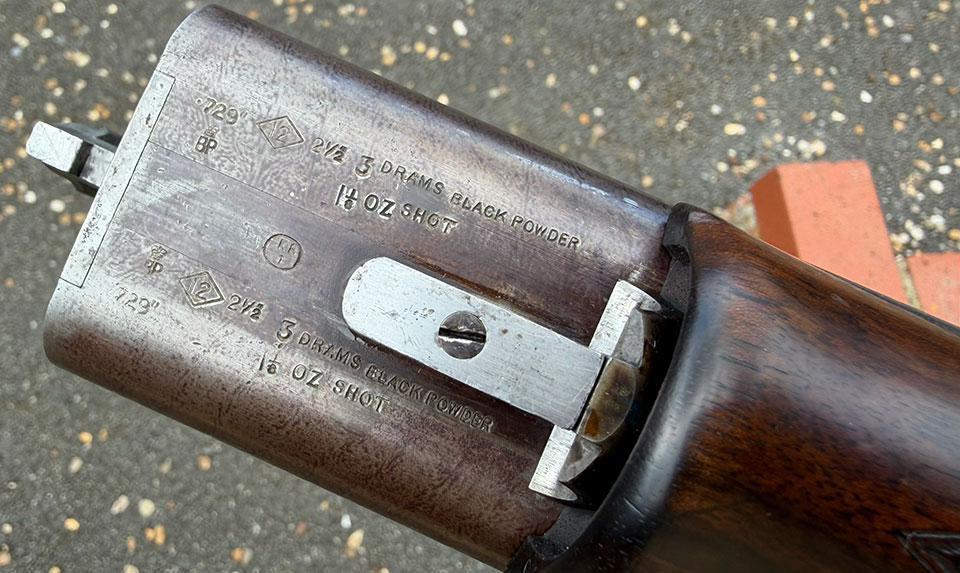
Made i the early 1870s, the gun is a 12-bore with the Westley Richards single lump and bolting by means of the firm's patent top lever and sliding bolt, combined with a doll's head rib extension, which receives the bolt in aslot at the rear. Later Westley Richards guns combined this with the Purdey bolt to make a treble grip system.
This early incarnation may look flimsy but the bolting point is actually ideally placed to prevent leverage and works more effectively than might be apparent.
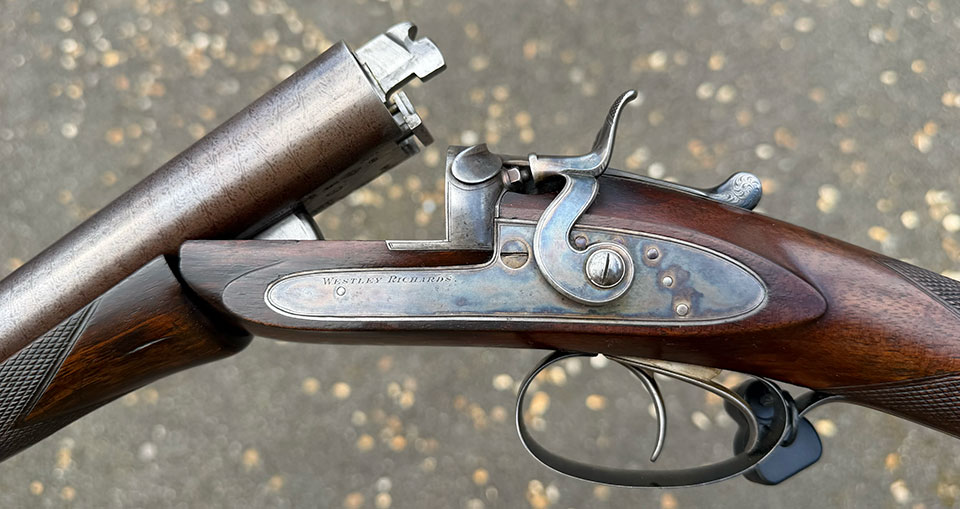
The rebounding bar locks are of superb quality and reflect the precision with which gunmakers of the time applied their hand tools and rudimentary machinery. I have long believed that some of the very best and most interesting bench work was done on breech-loaders between 1865 and 1880. Gunmakers then were also at their most inventive.
The case colours on the steel surfaces remains largely in tact. Don't be fooled by the lack of engraving; 'best quality, plain gun' is a commonly encountered note in the Westley Richards order books. Many sportsmen of the time preferred the plain look or saw no reason to pay for further embellishment.
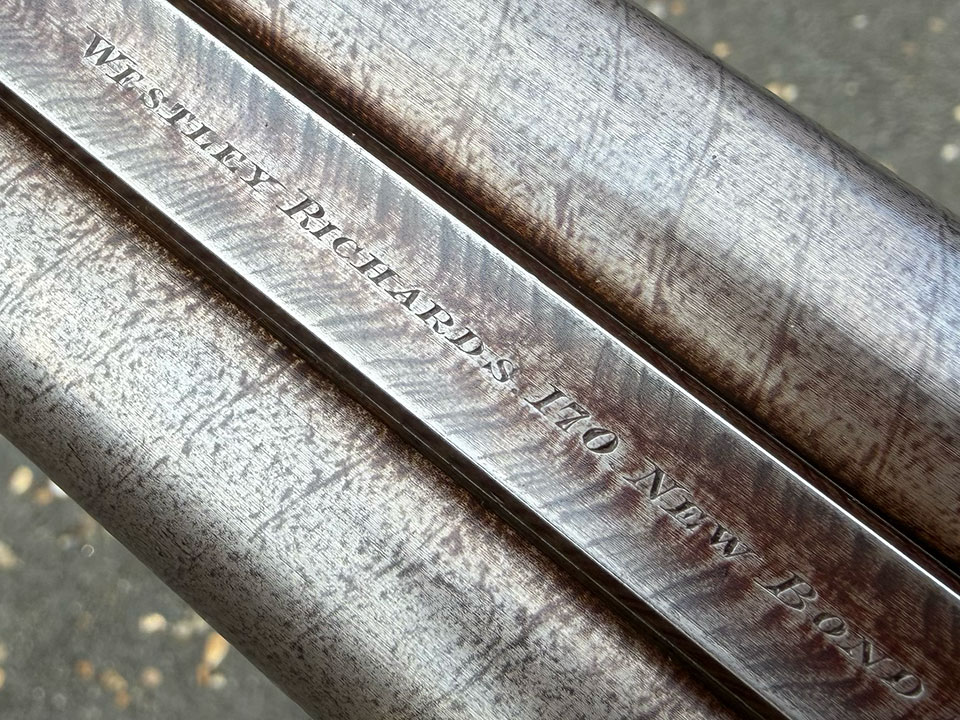
The gun bears the address of the Westley |Richards agency in New Bond Street, overseen by the famous 'Bishop of Bond Street', William Bishop, who did so much to make Westley Richards a de facto London maker, despite its Birmingham origins and factory. Bishop entertained the sporting gentry and his personality made the shop a regular destination for many of Londons young bucks.
The gun itself is instantly recognisable as a Westley Richards; the 'crab joint' of wood masking the forend iron and the full bar-in-wood styling make it, when closed, very like a percussion muzzle-loader in profile. Thsi conservative continuity of aesthetic is interesting, considering this gun is only four years earlier than the revolutionary Anson & Deeley patent that would change Westley Richards direction abruptly and bring their guns into the modern era.
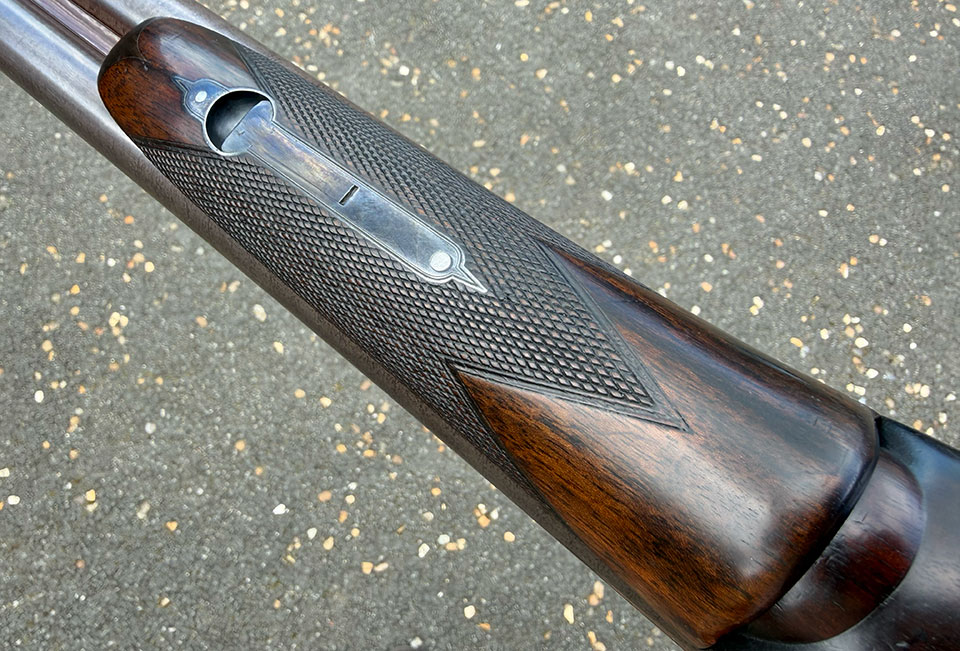
The gun has another Westley Richards patent - the Deeley & Edge forend catch of 1873, which is still very much evident on today's Westley Richards guns and rifles and has been very widely copied by other makers.
The woodwork is in remarkably good condition and shows little sighn of wear or re-finishing. The gun feels well balanced in the hands and comes to the shoulder nicely. Weight is well distributed and it swings easily. It has been re-proofed for black powder in the modern era, which is quite unusual. Most re-proof restorations put the gun through a nitro test and most black powder guns pass.
With a very modest reserve of just £500, I an struck by how beautifully made and well preserved this best quality Westley Richards is. The style is not to most people's taste and they never seem to do very well in the market. They certainly deserve to do better.
Westley Richards continued to offer hammer guns in catalogues after the 1875 Anson & Deeley patent was launched. However, they sold relatively few and best quality hammer guns by the company, of a more developed and common style are rare.
It would appear that, having offered the world the first truly modern and enduring hammerless gun, Westley Richards turned their full attention on this and championed it over the old-fashioned firearms with external hammers, which they saw as belonging to the past.
Examples like this provide a reminder of the wonderful quality and charmimgly antiquated character that they encapsulate. Every serious collection deserves one.
Published by Vintage Guns Ltd on