Every new technology experiences a degree of pushback or reluctance. Not every ‘new and improved’ idea is actually an improvement, and the more radical the idea, the harsher the initial reaction. The pattern for new adopters of technology is predictable: high up-front costs, flawed or buggy first issues, and the pain of mothballing still-functioning expensive gear.
Then you have the emergence of ‘fanboys,’ equally ardent critics, and the conflicting opinions of social influencers. While one can easily visualise all of these for the latest smartphone or new tech, the same happened in the 1850s and 1860s around the arrival of the breech-loading game gun in mid-Victorian Britain.
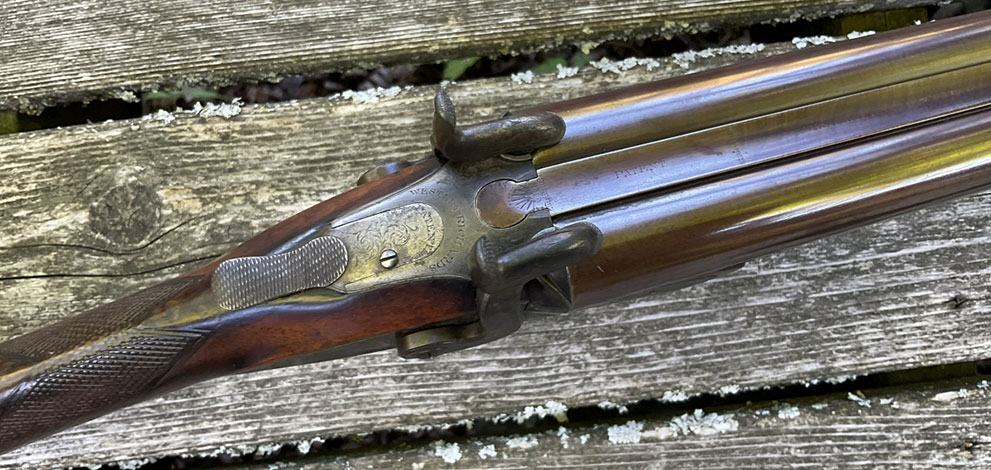
Had social media existed then as it does today, a typical clickbait headline might have been: “Seven reasons why the breech-loader will not replace the muzzle-loader. Number six will shock you.” Instead, the shooting press of the day filled this role, and none was as influential and involved as the weekly newspaper The Field.
In 1853, the first year a British-made pin-fire game gun might have been built, The Field began publication on January 1st. The Field was the brainchild of the novelist Robert Smith Surtees. Though a London publication, Surtees wished to see an illustrated newspaper aimed at sportsmen, landowners, farmers, hunters, and generally country gentlemen with interests outside of London’s urban landscape.
His founding editor, Mark Lemon, was chief adviser at The Illustrated London News at the time. Lemon had previously co-founded, with Henry Mayhew, the humorous paper Punch in 1841. The main competition for The Field was the weekly London paper Bell's Life in London and Sporting Chronicle, largely concerned with horse racing news, edited by Vincent George Dowling.
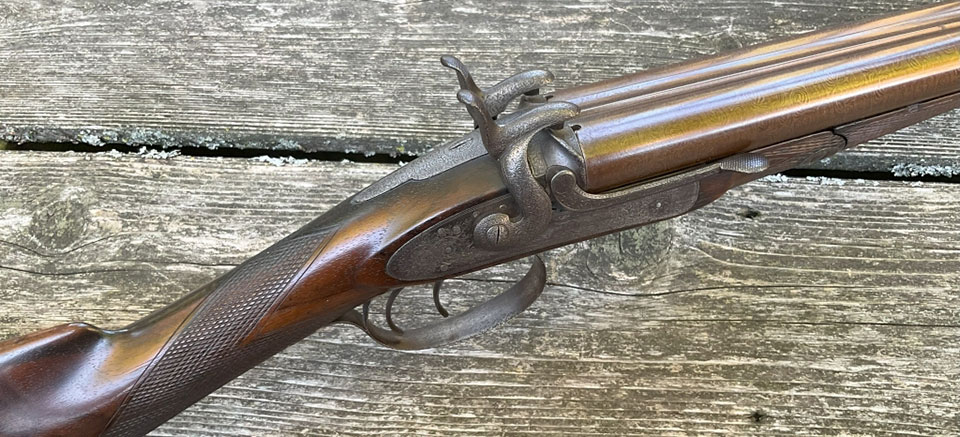
The Field was published every Saturday morning, in time for rapid dispatch by train and post to points beyond, at the price of sixpence per copy.
Trying to find one’s niche in the newspaper market was an ongoing concern for The Field, and its focus and coverage of sport-related subjects varied greatly over time, as did its self-titled branding. In its first decade, The Field started as ‘A gentleman’s Sporting and Family Newspaper,’ and from 1858, the masthead became simply ‘The Field.’
The Field as a vivid exchange of views...
The newspaper tried to be all-encompassing and, for a time, was one of Europe’s largest, with a spread of 24 pages. The Field offered something for everyone, in very fine print.
It is easy to summarise the debate between muzzle-loaders and breech-loaders that occurred within the pages of The Field as a vivid exchange of views that ultimately led the newspaper to propose and host a series of public trials. Indeed, this is how most books describe it, if explained at all.
While true, it does not properly reflect the concerns and opinions amongst a very privileged social class, about how best to pursue a leisure activity that relatively few in Britain could enjoy. Shooting was a gentleman’s sport, and the guns that could withstand shooting seasons of thousands of shots fired had to be of high quality and therefore expensive. The pin-fire fowling-piece was not an everyman’s gun, at least not in the 1850s. Neither was a top-quality muzzle-loader.
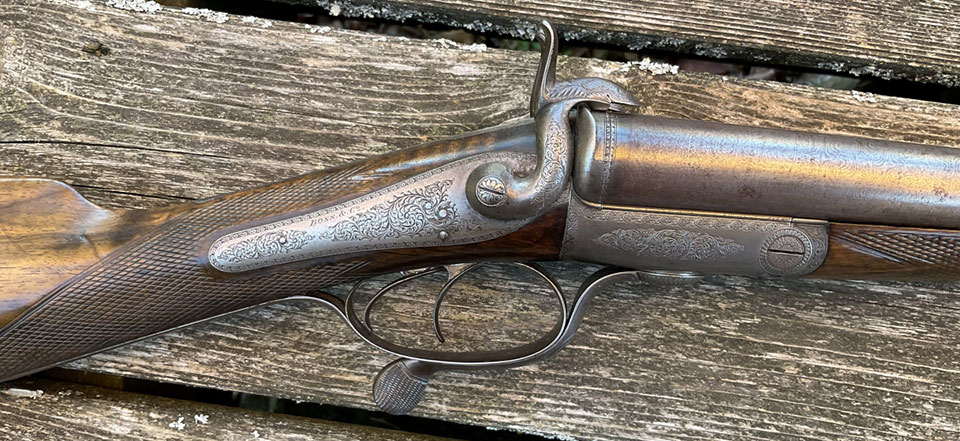
I assume that regular readers of The Field looked forward to every issue, with many taking out their steel-nib pens, inkwells and blotters to write elegant responses to the Editor. The readership included not only the gentlemanly class but also the principal gunmakers, who used The Field for their own advertising and to keep up with competitors and the current ideas that influenced the demands of prospective clients.
With column space being limited, only selected letters would be printed, and it appears the Editor chose letters that made the best points, provided valuable information, or furnished opinions that might provoke a subsequent response. Letters that might leave a bewhiskered gentleman red-faced, spluttering into his port, and reaching for his writing-box, sold newspapers.
Occasionally, the Editor would add a comment, sometimes intended to challenge or provoke, or the Editor would call for a more temperate tone between correspondents, when it looked like a call for seconds and pistols at dawn might be an outcome. From time to time, a spat occurred between a correspondent and the Editor, for which the 20th-century expression “never argue with someone who buys ink by the barrel” most certainly applied, as the Editor always had the last word.
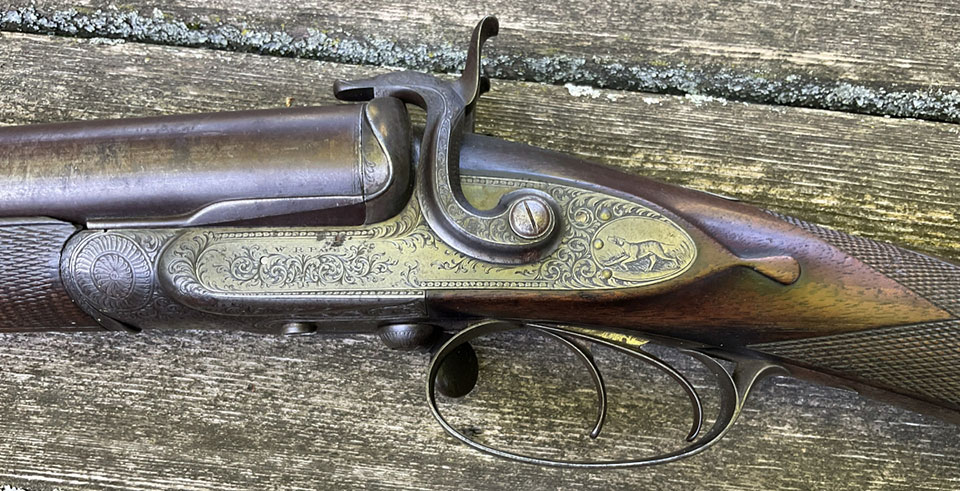
On matters relating to guns and shooting, there was, in The Field’s first year, surprisingly very little within its pages. Had Joseph Lang’s pin-fire gun been available at the time, it would have certainly been discussed. Lang even posted an advertisement in the 30 April 1853 issue, in which there is no mention of his breech-loader.
This lends credence to the theory, backed by Lang’s own writings, that Lang’s pin-fire gun appeared in early 1854. In January 1855, new proprietors of The Field were announced, and there was a spirited debate on the merits of London-made versus provincial guns and equally heated views were exchanged on the long-distance shooting properties of fowling pieces, but still no mention of breech-loading game guns.
By June 1855, more gunmakers were advertising, and a subheading ‘Shooting’ began to appear in the letter responses section. Joseph Lang continued to advertise, mentioning needle-fire guns and rimfire rifles but, curiously, not his pin-fire gun. Lang didn’t mention his ‘improved Breech-Loading Guns’ before June 1856; by September of that year, Harris Holland began advertising his pin-fire gun.
Finally, in the 20 December 1856 issue, a question appeared from a correspondent under the pseudonym ‘Curious’: “If any of your numerous correspondents have used the breech-loading shot guns, would they be so good as to say what they think the advantages or disadvantages of them may be?” This was the start of over ten years of spirited debate in The Field concerning the merits of the breech-loader versus the muzzle-loader.
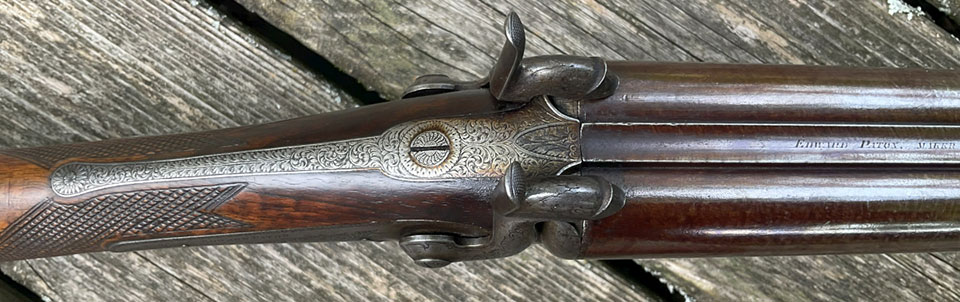
With the amusement that hindsight allows us, here are seven major arguments brandished against the breech-loader, as they appeared in The Field’s pages: purchase cost; operating cost; poor performance; dangerous ammunition; too much speed; over-performance; and bad etiquette.
All of these arguments were rendered moot over time, partly from improvements in the guns and ammunition, and from a slow but steady appreciation of the benefits of the breech-loader and the results of the public trials hosted by The Field. By the end of the 1860s, the pin-fire breech-loader had successfully replaced the venerable muzzle-loader in the shooting field, only to find itself made obsolete by the central-fire gun.
Lancaster’s 60-guinea breech-loaders were the most expensive
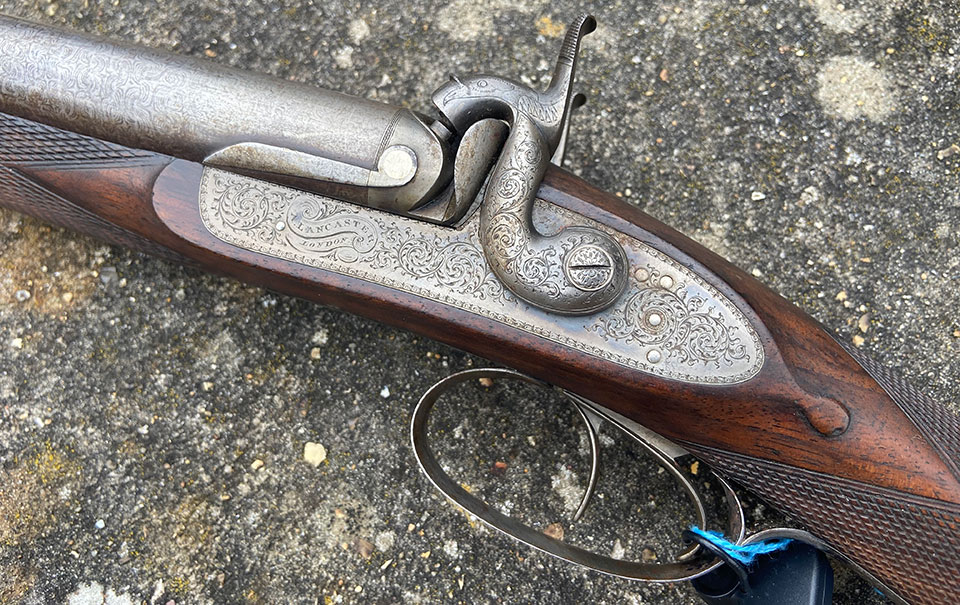
The emerging market for breech-loading guns was of concern only to the wealthiest class. Being an ardent game shooter cost both time and money, and British-made breech-loaders were sold to gentlemen who could afford prices above those for the best muzzle-loaders; Charles Lancaster’s 60-guinea breech-loaders were the most expensive sporting guns in London.
Moderately-priced guns could be sourced from the Continent, where breech-loading guns had been in use for several decades, but those preferring guns of British make had to accept the demands of a small number of elite gunmakers. The business model of a gunmaker, selling items built to last several decades of hard use, is a tricky one at best. Avid followers of shooting sports were likely to already own quality muzzle-loaders, so the added cost of a new, more expensive breech-loader would deter many otherwise curious clients. With few examples of breech-loaders on offer, and limited actual experience of their use, it is perhaps no wonder the first years of The Field contained little mention of them.
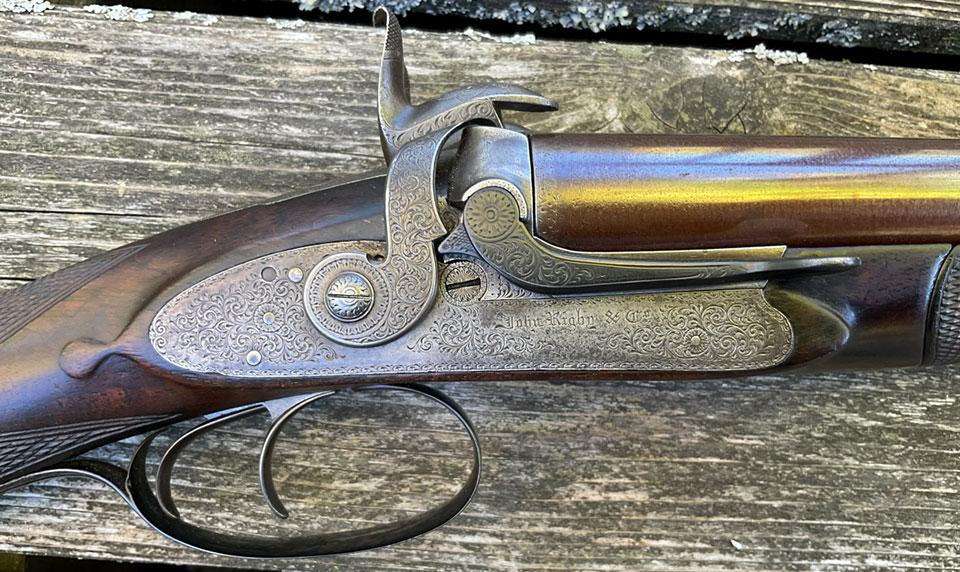
One might think that anyone wealthy enough to pursue shooting sports and purchase the latest gun would ignore the trifling extra cost of cartridges over loose powder and shot. One would be wrong. The pages of The Field were filled with back-and-forth arguments over the cost of shooting breech-loaders. In the 14 February 1857 issue, correspondent ‘A Soldier’ explained that the cost of primed but unfilled pin-fire cartridges was six shillings per hundred, accounting for the extra cost over the usual purchases of powder and shot.
It was also stated that cartridges could be recapped and refilled, reducing subsequent costs. No sooner than the following week, ‘Forester’ claimed that over a shooting season, “the extra cost for ammunition alone will be equal to a new pair of guns each year,” which I’m sure would have worried some readers.
He went on to claim, “I am in a position to know that anything which aids materially to the price of ammunition will not become general.” There was a rebuke the following week, in the 28 February issue, where the correspondent ‘Subscriber’ explained that it would take 20,000 shots to represent such a cost. He further explained that the more rational number of five thousand, “which is more than used by nineteen out of every twenty gentlemen,” would put the extra cost at twelve pounds and ten shillings, and which would be more than compensated by the increased bag.
a cartridge may fit in one gun but not another
This is another example where arguments in print are not won by facts, and over the next months the debate raged back and forth over the additional outlays, with objectors depending heavily on hearsay and emotion, discounting those with direct experience (some things never change). Throughout the 1860s, discussion of cartridge costs gave way to issues of cartridge refilling, which drew many comments, both good and bad.
If added costs weren’t a deterrent, breech-loaders committed the cardinal sin of inferior shooting qualities when compared to the ‘common gun.’ This argument had some merit, at least in the early years when much was still experimental. Early chamber design, patterned after French guns, had a hard shoulder between the chamber mouth and the barrel tube.
This was eventually smoothed to create what is now termed the forcing cone. Chamber sizes were not yet standardised, so a cartridge may fit in one gun but not another, even if they were the same bore. Materials used in different brands and grades of cartridges varied in robustness and quality, undoubtedly resulting in a wide range of performance.
Barrel boring was still an arcane art, and some gun barrels prior to the invention of choke-boring simply shot better than others (partly explaining why so many prized muzzle-loaders were later converted to breech-loading). It was generally accepted that an extra quarter- or half-drachm of powder in each charge improved the penetrating performance of the cartridge gun, in line with that of the muzzle-loader. Together with the cost of the cartridge tubes, this added to the extra cost of the breech-loader.
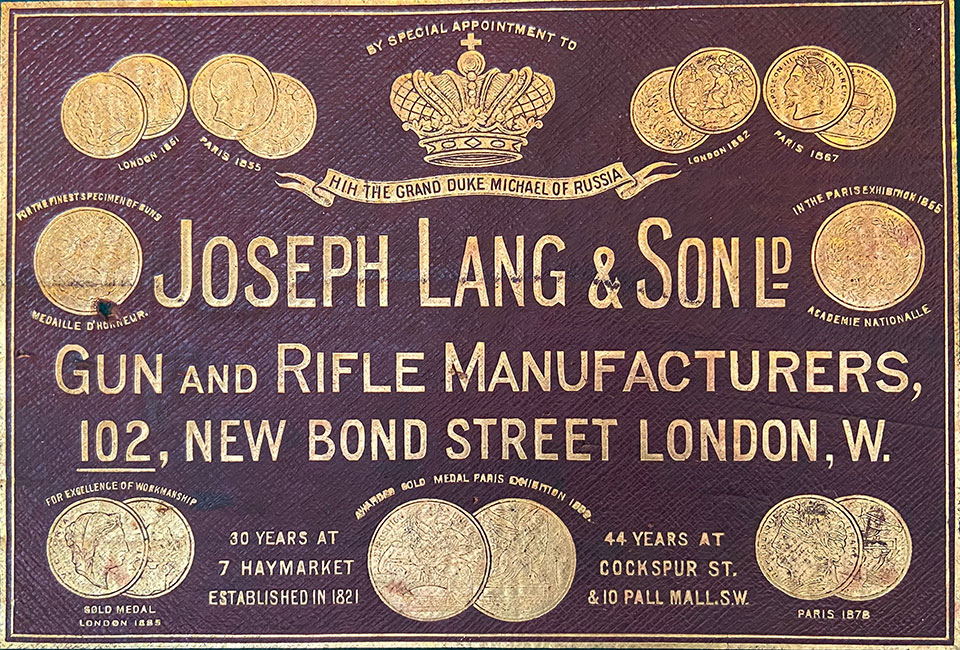
Prior to the public trials, there was no standard against which the performance of breech-loaders against muzzle-loaders could be measured. A common point of comparison was whether an empty powder tin could be pierced at forty yards, though it was pointed out that different brands had tins of varying thickness. The arguments were usually expressed as assertions, each side arguing their preferred fowling-piece shot harder than any other.
The vagaries of powder, wadding, and damp conditions undoubtedly produced a range of results, and several correspondents backed their claims of superior shooting qualities for either type of gun with challenges and offers of cash purses to the winner. Some of these exchanges were quite heated, and ultimately the matter was settled, to no one’s total satisfaction, by The Field’s trials in 1858 and 1859. Even well-meaning supporters of the breech-loader often muddied the waters.
In the 31 October 1857 issue, there was a lengthy submission by Major Henry Astbury “The Old Shekarry” Leveson, titled “Observations on the Breech-loader.” Leveson, a prolific author and one considered to be amongst the greatest big-game hunters of the Victorian period, championed the cause of the breech-loader.
claims included the assertions that breech-loaders were quieter
Unfortunately, he made a number of claims that were too good to be true, sparking many subsequent responses, including criticisms from some of the most highly regarded gunmakers at the time. These claims included the assertions that breech-loaders were quieter, had little recoil, and hit harder and carried much further than muzzle-loaders (ironically, these were the same assertions made by Colonel Peter Hawker when he argued flint guns were superior to percussion).
Despite correspondents agreeing that breech-loaders were more than capable game guns despite their teething issues, the main arguments were between sides who said much but listened little and who felt the need to vanquish their opponents.
Then, there was the matter of carrying live, primed cartridges. This might seem amusing today, but primed cartridges were an entirely new idea for British sportsmen in the 1850s, and there was much hesitation against the notion. This concern has probably lasted the longest: ask AI whether the pin-fire cartridge was inherently dangerous, and it will more often than not assert that it was, since the exposed pin could, if jostled in one’s pocket, detonate the cartridge.
the myth of the dangerous pin-fire cartridge has been repeated in print so many times...
AI doesn’t know any better; the myth of the dangerous pin-fire cartridge has been repeated in print so many times as to become a reliable ‘fact’ to the ever-scraping large language models. This ‘fake news’ was coined by the muzzle-loading crowd, who argued the grim dangers of carrying pin-fire cartridges. It was also later repeated by proponents of the central-fire system, who had their own product to promote.
In the 21 March 1857 issue, ‘A Lover of The Field’ mildly asked about the dangers of the cartridges, surmising that the protruding pins might tear holes in one’s pockets. A flurry of respondents replied that the cartridges could be carried without issue, in a variety of ways. ‘Pero’ argued in the 26 December issue that “nothing short of the regular blow of the hammer suffices.
I have subjected them to various trials, such as I cannot imagine could occur to them from a fall or blow when out shooting, and I have never succeeded in letting one off.” The correspondent ‘A Soldier,’ responding to another subscriber’s concerns, wrote: “‘Wide-awake’ complains that he is daily afraid of a fall when he has pockets full of breech-loading cartridges. I really am almost uncharitable enough to wish he had one, though perhaps that would not convince him that it is impossible they would go off; the non-resistance of the body would effectually prevent their doing so.
The cartridge requires to be solidly fixed when the peg is struck; so much so, indeed, that ‘Wide-awake’ would find a difficulty in firing a cartridge holding it in one hand and driving the peg with a hammer held in the other. A cartridge may be placed in a vice, and the peg gradually staved in as far as it will go without igniting the caps. It requires a sharp rap, and the cartridge to be immovable.” It was ‘Wide-awake’ who was immovable, writing in the 16 January 1858 issue, “I still think that the danger of carrying the cartridges is the principal objection to the breech-loader.”
Some correspondents reminded readers that the real risk was not primed cartridges, but loading accidents with muzzle-loaders, leading to the not-unheard-of loss of fingers. Still, the misbegotten reputation of the dangerous pin-fire cartridge persists.
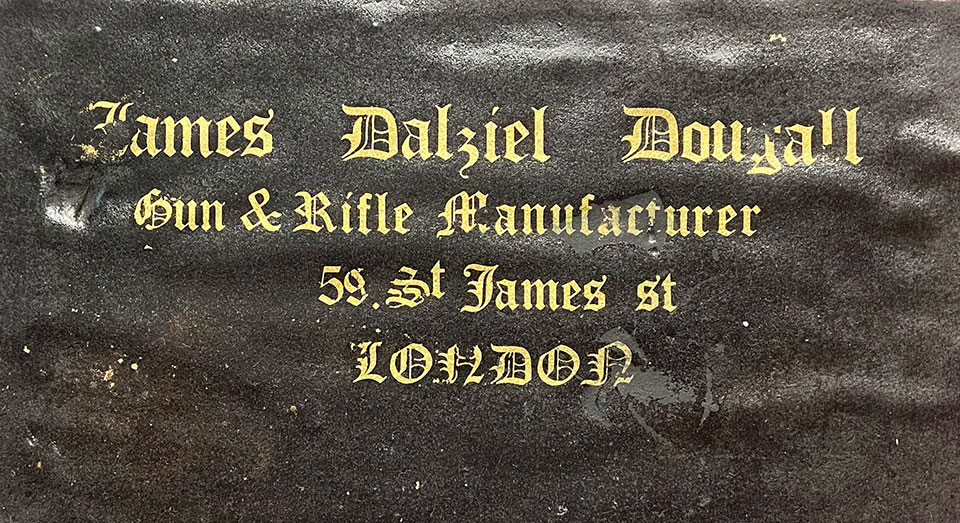
The speed with which a breech-loader could be loaded, reloaded, and unloaded compared to a muzzle-loader would appear to be an obvious plus, but these qualities were argued to be unnecessary and counter-productive to one’s enjoyment of the sport. In his 1857 book, Shooting Simplified: A Concise Treatise On Guns And Shooting, the Glasgow gunmaker James Dalziel Dougall decried the loss of “those little rests, while loading, to men and dogs, which preserve their strength throughout the day, and add a zest from the incidental conversation during these pauses.”
Before the wider development of driven shoots, most game shooting was of the walked-up variety, and opportunities on flying birds were few and scattered; there was little need for quick reloading. With better game management and a social calendar organised around shooting estates, the quick-loading advantages of the breech-loader would eventually gain acclaim.
An offshoot of the breech-loader’s efficiency was the related complaint that the breech-loader was too successful, given its ease of use. The correspondent ‘Copper Cap,’ writing in the 22 January 1859 issue, tried “to draw the attention of my brother sportsmen to the inevitable result that must ensue by the general use of the breech-loader,” namely, the wholesale destruction of game. “If he wish to kill as much in one day as is usually done in two, or if he desire to free the ground of game altogether, let him use the breech-loader by all means, and he will very soon be enabled to accomplish his object.”
but a sorry sight to the genuine sportsman...
On the subject of increased bags resulting from the use of breech-loaders, he wrote: “Such work is slaughter if you like, but sport it is not; and the survey of the killed at the conclusion of such a murderous day’s work has, after all, presented but a sorry sight to the genuine sportsman.” This prompted an editorial from John Henry Walsh in the 29 January 1859 issue, who, frustrated with the endless debate, remarked that the increased efficiency of the breech-loader in taking game should be considered a positive advance, not a negative one. He then closed off debate in The Field to all but comparisons of shooting powers.
Finally, some believed the use of breech-loaders was simply bad sportsmen's etiquette, if in the presence of shooting companions using muzzle-loaders. Comments were made such as “few men like to be out with a companion who kills four brace to his one,” and “Readers, now let me ask you to pause awhile before you arm yourself with the deadly breech-loader, and consider whether, in the event of your having one, you would be a welcome guest in the field that you have hitherto been?” The efficiency of the breech-loader meant putting their companions to shame – it just wasn’t a gentlemanly thing to do.
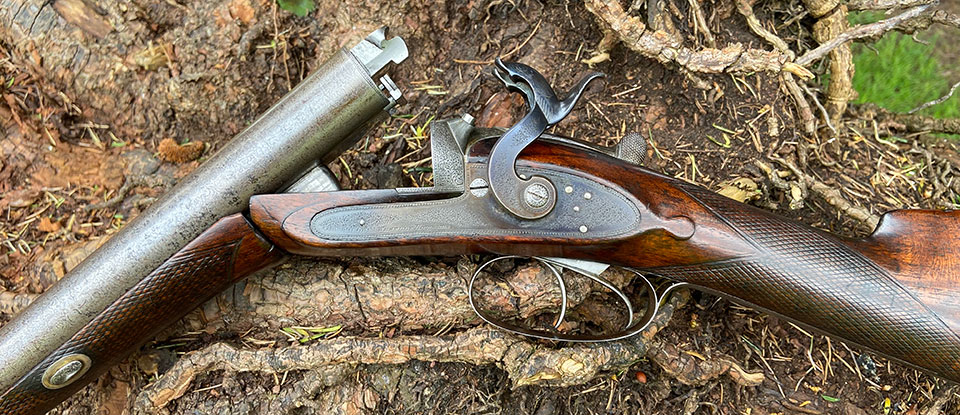
Despite the real technical issues, the imagined deficiencies and dangers, and the social complications, the breech-loader did eventually supplant the muzzle-loader, much as the copper cap had replaced flint earlier, but it did take more than a decade to accomplish the transition and win the approval of the sporting public.
There were valid concerns, such as sticking and splitting cartridges and weak mainsprings, and arguments yet to be fought over central-fire vs pin-fire, black vs smokeless powders, choke boring, and many others, but by the end of the 1860s, breech-loading had defeated the nay-sayers, and few wanted to go back to the copper cap.
Stephen Nash
25 April 2026
Published by Vintage Guns Ltd on