London Sporting Park was located in Hendon, in what is now North London. Established at that location in 1897 by Mr. Watts (whose first name appeared lost to history until Donald Dallas revealed it to me this month as William Webster Watts).
Mr. Watts had an earlier business called the London School of Shooting, situated between Wormwood Scrubs and Wood Lane, on the premises of the old Notting Hill Gun Club, once a famous live pigeon competition venue.
Mr. Watts was, it seems certain, a very skilled and well-respected shooting instructor and gun-fitter. It is reported that he disliked try-guns and used his eye and experience to fit his customers.
Once he was settled in Hendon, he continued to host customers and fit their guns for them, as well as undertaking the same services on behalf of some gunmakers. Notable among them was Edwinson Green of Cheltenham & Gloucester, who would use London Sporting Park as a ground for his customers to have guns fitted or practice shooting. He also had a relationship with the firm of Boss & Co.
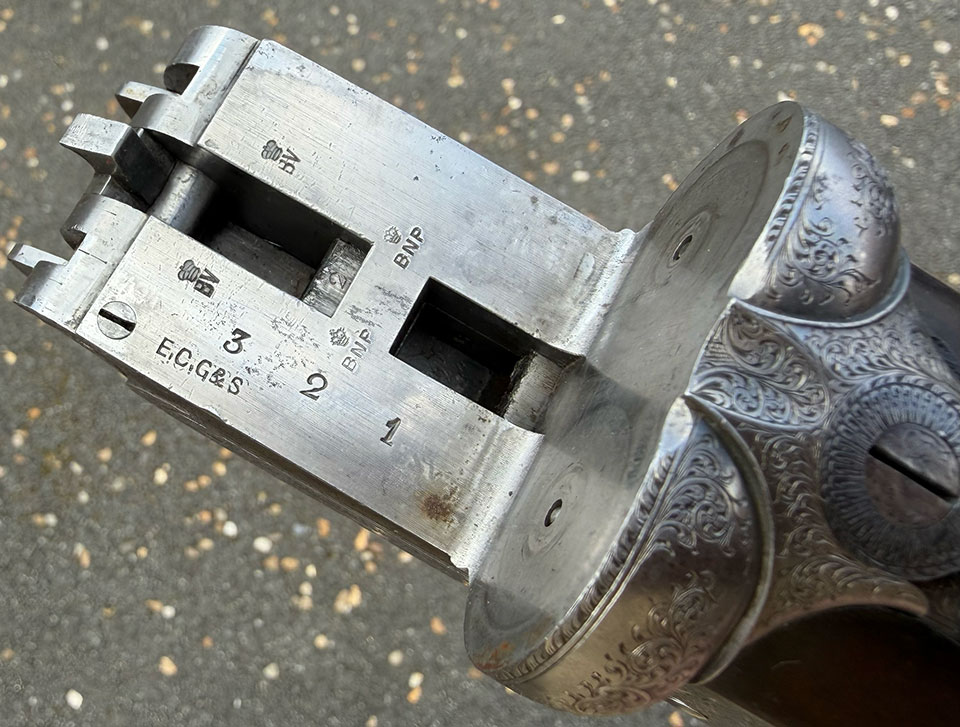
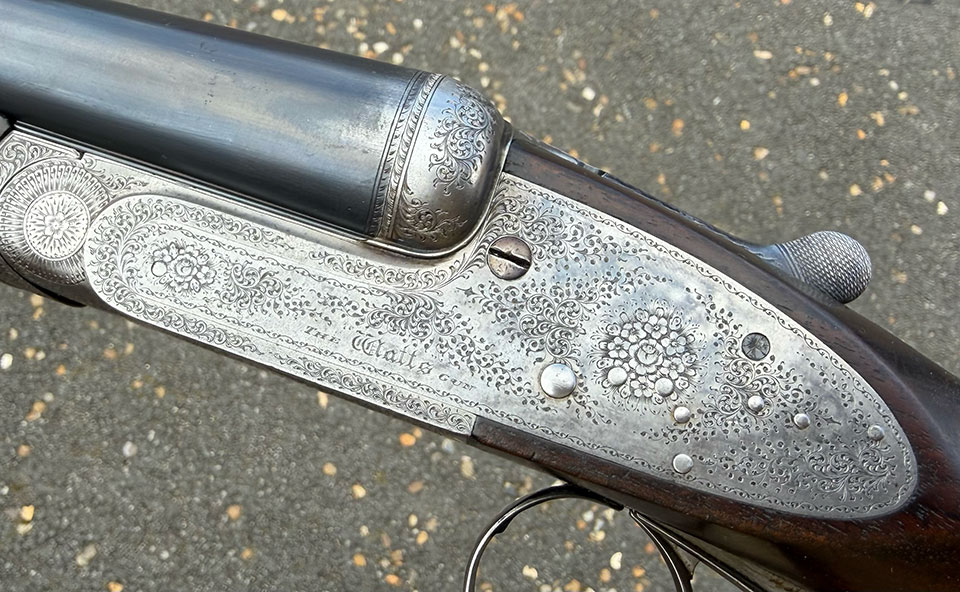
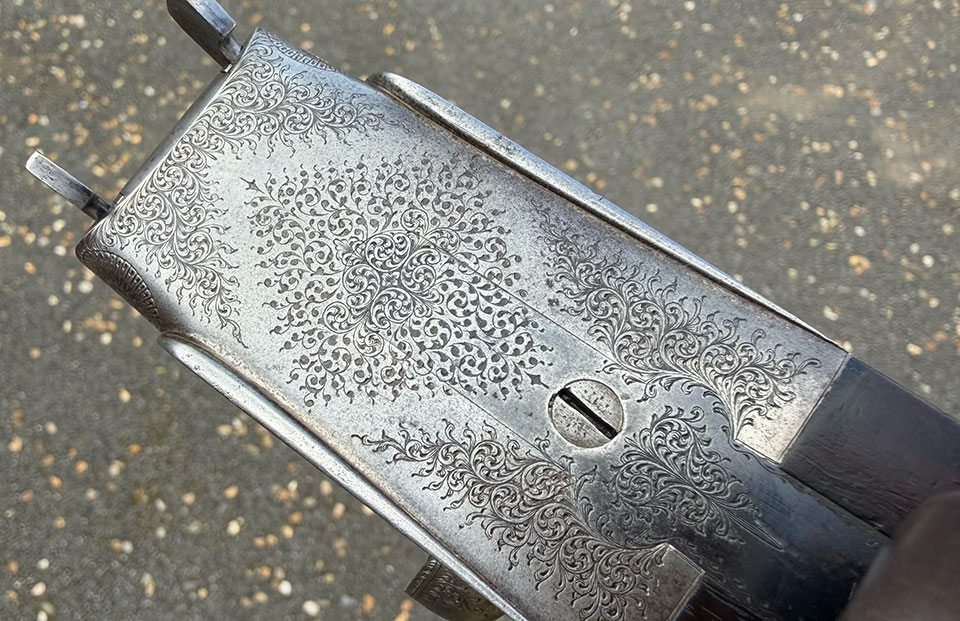
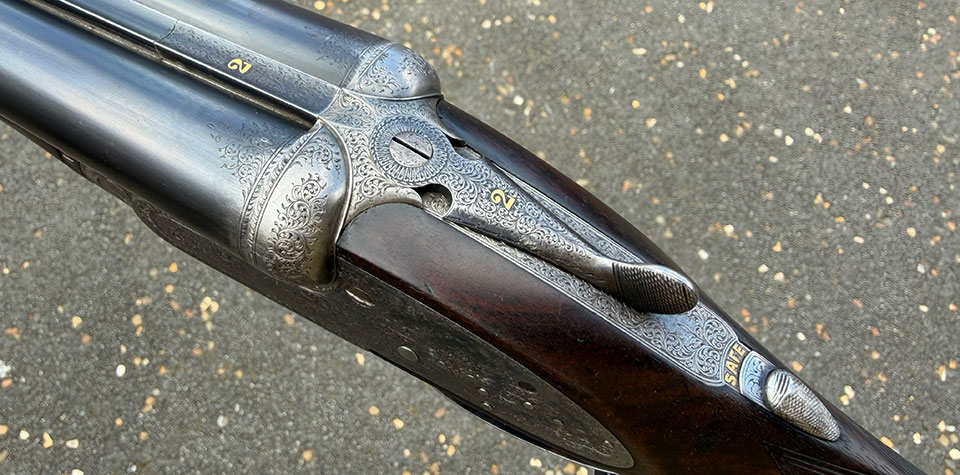
The gun photographed here bears the mark of both firms. The stamp ‘ECG&S’ on the bar flats is for Edwinson C. Green & Son, while the engraving of rose bouquets and scrolls is executed by the Sumner studio in London, famous for engraving guns for both Boss & Co. and John Dickson & Son.
This gun is one of a pair, has a self-opening mechanism and bar action sidelocks. Quality is superb and reflects the know-how of Mr. Watts and the high quality clientele he had.
The process of building these ‘Watts Guns, which appear infrequently, is interesting to me, as I have, over the years, undertaken a similar policy in building best quality guns using my gun trade contacts, thereby enabling my clients to have best London guns at half the cost of an identical one bearing a London name.
Unlike Mr. Watts, I have resisted the temptation to put my own name on these, instead having the customer’s name on the locks.
When advising sportsmen on selecting an English gun of pre-war vintage, I have long advocated for ignoring the name but looking at the gun and assessing its quality. There could be no better example of the efficacy of this policy than is evident in this Watts Gun.
The 19 thou left barrel wall might depress the value rather
It has 29” Krupp steel barrels and dates from around 1910. This one (the No.2) has its original stock and its sister has a well-fitted replacement. They arrived at Holt’s auctioneers cased and in need of a light overhaul. The 19 thou left barrel wall might depress the value rather but with a reserve of just £2,000 they represent remarkable access to best London self-opening side-lock ejectors with a refined history for very little outlay.
The gun is of best quality, without a doubt. Edwinson Green was a first-class gunmaker, whose inventions prompted Purdey’s first foray into over & under guns and persuaded Westley Richards to sell his three-barrelled gun for a while. He also sold a few of these with his own name.
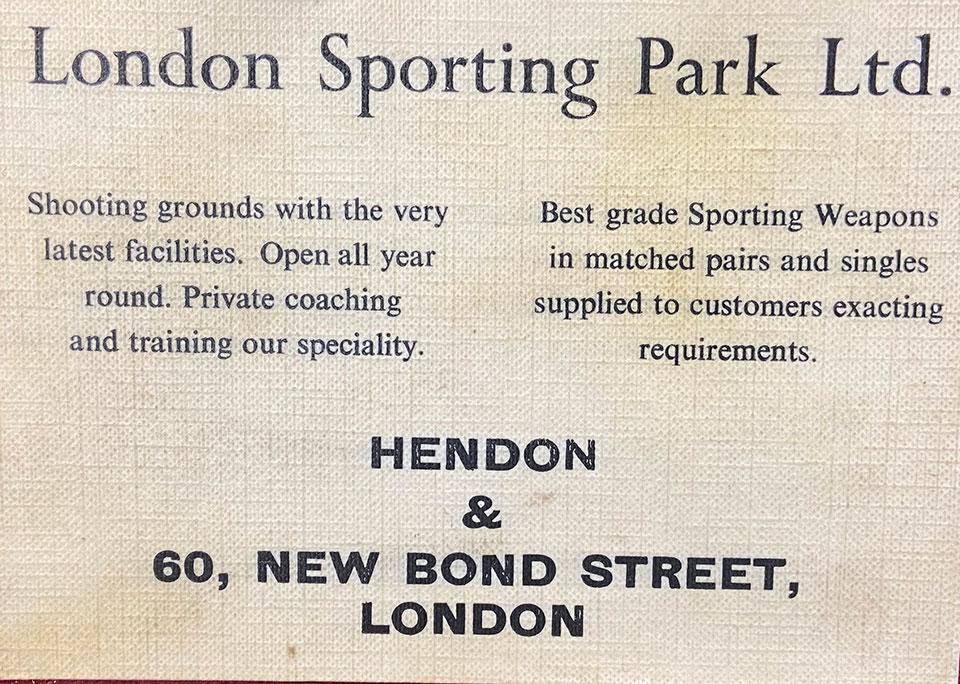
By 1918, the London Sporting Park was no more and the fifty-acre, green-field site in Hendon was soon swallowed up by housing development. Mr. Watts died in Debden in 1941 but these superb guns bearing his name live on to continue his legacy.
I would be proud to own one and I’d be sure to raise a glass to Mr. Watts after every outing.
Published by Vintage Guns Ltd on